CALL TODAY for FREE In home consultation
SEND EMAIL
1995 East Norse Avenue
Cudahy, Wisconsin 53110
414-727-2524
4445 W Forest Home Avenue
Milwaukee, Wisconsin 53219
414-727-2525
2140 American Drive
Neenah, Wisconsin 54956
920-257-6060
65 Copeland Avenue
La Crosse, Wisconsin 54603
608-784-9980
Choosing the best mobility van for global buyers in 2026 is not simply a matter of selecting the newest model. The right vehicle must fit its passengers, wheelchair equipment, daily routes, and local service network. Small details matter: doorway width, ramp angle, turning space, and whether a caregiver can secure a chair without awkward reaching. Fit comes first.
The need is substantial. The World Health Organization’s 2022 Global Report on Health Equity for Persons with Disabilities estimates that 1.3 billion people—about 16% of the world’s population—experience significant disability. The United Nations’ World Population Prospects 2022 also projects that one in six people worldwide will be aged 65 or older by 2050. These figures do not predict mobility van sales, but they show why accessible transport deserves serious attention. Demographics are not a product specification.
For buyers comparing vehicles across regions, the strongest choice balances safe access, interior layout, dependable operation, and support after purchase. Check how the ramp performs on uneven ground, where mobility devices are secured, and whether replacement parts are available nearby. A polished brochure can hide a frustrating daily routine. It happens. Conversion quality, warranty terms, and local accessibility requirements also vary, so verify them with qualified providers in the intended market. There is no universal winner. This guide examines the practical questions behind the “best” mobility van, helping buyers compare options with evidence rather than relying on one headline feature.

A mobility van is a passenger vehicle configured to help people with limited mobility travel safely and comfortably. Typical features include a ramp or lift, clear interior space, wheelchair restraints, and seating suited to transfers. Layouts vary; one van may need to carry a wheelchair user, family members, and care staff without blocking access. Fit matters.
Needs differ between daily errands and longer journeys. The World Health Organization’s 2022 Global report on health equity for persons with disabilities estimates that 1.3 billion people—about 16% of the world’s population—experience significant disability. That scale makes accessible transport a practical need, not a niche feature. For global buyers, consider real conditions: tight parking spaces, uneven curb cuts, long trips, and local repair capacity. Paper specifications can still disappoint.
Tips: Measure the wheelchair and door opening before choosing a layout. Check ramp angle, headroom, restraint documentation, and whether essential parts can be serviced locally. Request a loading trial with the actual passenger and wheelchair. Small details matter, and capacity figures alone do not tell the whole story.
The best choice depends on the traveler, wheelchair, and daily journey. Compare practical needs such as safe access, securement, passenger transfer, caregiver space, flexible storage, and local service support.
Scores are an illustrative planning framework, not survey findings or a universal ranking. Buyers should confirm vehicle fit, accessibility requirements, and service availability in their destination country.
Global buyers in 2026 can choose among several mobility-van layouts. The right type depends on how passengers enter and travel. Ramp-entry vans allow a wheelchair user to roll into the cabin, either through a side door or a rear opening. Side-entry layouts may leave space for other passengers beside the wheelchair. Rear-entry layouts can suit narrow parking spaces where side access is limited. Measure twice.
Some conversions use a lowered floor and a fold-out ramp, while others use a lift to raise a wheelchair into the vehicle. Full-size, high-roof vans offer more standing room and flexible seating, but their height and turning space may be difficult in older streets or low garages. Smaller vans are easier to park, though cabin room and wheelchair positioning can be more restricted. Transfer-friendly models provide grab handles and supportive seats for passengers who move from a wheelchair into a vehicle seat.
Compare the ramp angle, doorway width, interior headroom, restraint arrangements, and space for luggage or caregivers. Ask to see the van with the actual wheelchair and passenger setup; a brochure’s measurements may not reveal awkward turns or blocked sightlines. A tidy specification sheet can still mislead. Treat it as a starting point, then check access on the roads and at the destinations the van will actually serve.
What Is the Best Mobility Van for Global Buyers in 2026?
Comparing mobility vans starts with real wheelchair access, not attractive specifications. Measure the chair, user, ramp angle, and interior turning space. A wide side entry can simplify transfers, especially in crowded parking areas. Check the platform height carefully. Small differences matter.
Payload capacity deserves close attention. It must cover the wheelchair, passengers, driver, and travel equipment without reaching its limit. Look for secure restraint points, adjustable seating, clear visibility, and simple controls. Test the ramp or lift repeatedly. It should operate smoothly, even when the user is tired or the weather is poor. Manual backup access is useful when power fails.
Comfort affects daily confidence. Evaluate headroom, floor height, suspension, cabin noise, and climate control in hot or cold regions. Ground clearance may matter on uneven roads, but a higher floor can complicate entry. That trade-off is easy to miss. Buyers should also compare service availability, spare-part access, warranty terms, and technician training in their market. Local vehicle dimensions and accessibility requirements can vary, so professional inspection remains important. A van may look perfect in photographs and still feel awkward after ten minutes inside. The best choice is not always the largest model; it is the one that fits the user, route, budget, and support network reliably.
| Comparison factor | Rear-entry minivan conversion | Side-entry minivan conversion | Full-size accessible van |
|---|---|---|---|
| Typical access route | Ramp or lift at the rear; the wheelchair user enters behind the passenger area. | Ramp or lift through a side door; some layouts allow the wheelchair user to sit near the front. | Usually a side or rear lift, or a ramp where the floor height and layout permit. |
| Best suited to | Buyers seeking a compact family vehicle and who can accommodate rear access. | Buyers who need curbside access or want flexible passenger seating around the wheelchair position. | Buyers needing more cabin volume, additional wheelchair positions, or room for larger mobility equipment. |
| Wheelchair capacity | Commonly configured for one wheelchair position; usable space depends on the conversion and vehicle. | Commonly configured for one wheelchair position, with seating layouts varying by conversion. | Can be configured for one or more wheelchair positions; capacity depends on the floor plan and payload limits. |
| Passenger seating | Often retains some original seating, but the ramp and wheelchair area may reduce the number of seats. | Seat count and placement vary; removable or repositionable seats may be available in some layouts. | Generally offers the most flexibility for seating, subject to wheelchair positions and local seating regulations. |
| Parking and access space | The vehicle needs clear space behind it to deploy the ramp and complete boarding. | Needs adequate side clearance for the door and ramp or lift; curb access can be helpful. | Typically requires more parking space and careful checks of garage height and access routes. |
| Ramp or lift considerations | Ramp slope depends on ramp length and floor height; check whether the user or caregiver can manage deployment. | Side-entry ramp slope and door opening should be checked with the actual wheelchair and intended parking conditions. | A powered lift may suit a heavier chair or steeper access needs; confirm lift capacity and maintenance requirements. |
| Securement and occupant safety | Check for wheelchair tie-downs and an occupant restraint system designed for the seating position. | Confirm that the securement system is accessible and that the wheelchair position does not obstruct an exit. | Check every wheelchair position, restraint arrangement, emergency exit, and applicable local safety standards. |
| Daily operating considerations | Compact size can be easier to use in urban settings; rear access may be inconvenient in tight parking spaces. | Side access can simplify curbside boarding, but a neighboring vehicle may limit ramp deployment. | More interior room can support varied needs, while larger dimensions may affect maneuvering and parking. |
| Ownership and service | Budget for both vehicle servicing and inspections or repairs of the ramp, floor, and securement equipment. | Ask about local support for the conversion equipment and availability of qualified service technicians. | Check operating costs, parts availability, lift servicing, and whether local roads and parking suit the vehicle size. |
| Key fit check before purchase | Measure the wheelchair, user, and rear access area; test entry in the spaces where the van will be used. | Test entry from the intended curb or parking position and confirm the wheelchair user’s preferred seat location. | Verify interior height, doorway clearance, payload, wheelchair capacity, and parking-space dimensions. |
Note: These are general configuration comparisons, not guaranteed specifications. Available layouts, dimensions, payload, accessibility equipment, and legal requirements vary by vehicle, conversion, and country. Confirm fit and safety with the supplier and a qualified mobility specialist before purchase.
For global buyers, the best mobility van is not simply the roomiest model. It must protect passengers during everyday travel and suit the places where it will operate. Check crash protection, restraint compatibility, and the safe working limits of ramps or lifts. A wet ramp, steep driveway, or narrow parking bay can reveal problems that a brochure misses. Test the full boarding process with the intended wheelchair and passenger, if possible.
Local rules can change the right choice. Requirements may cover approved wheelchair restraints, seat-belt positioning, vehicle inspections, accessibility features, and who may modify the vehicle. Confirm current requirements with the relevant transport authority and a qualified mobility-vehicle specialist before purchase. Ask which documents prove that a conversion meets local standards. Rules differ, and they can change.
Measure more than the doorway. Check interior turning space, headroom, ramp angle, and room for caregivers to reach buckles without twisting. Consider battery range for powered equipment, service access, and parts availability in the destination country. Small details count. A familiar route is a useful test: simulate entering, securing the chair, and unloading at a curb. Still, measurements do not tell the whole story; passengers may find a layout tiring after longer trips. That deserves a second look.
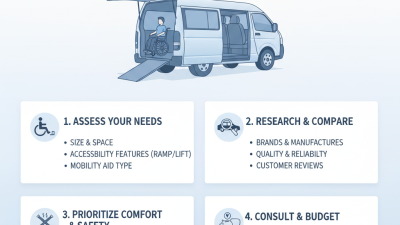
For global buyers in 2026, the best mobility van is not automatically the newest or most spacious. It should match daily travel, caregiver support, road conditions, and available cash. A practical assessment starts with boarding frequency, wheelchair dimensions, and the number of passengers. Measure twice. A compact van may cost less initially, yet limited turning space can create expensive modifications later. This is where an occupational therapist or experienced mobility-conversion specialist adds useful, independent judgment.
Budget planning must include more than purchase price. Request separate figures for the vehicle, ramp or lift, securement system, delivery, taxes, registration, insurance, and servicing. Electric models can reduce local running costs, but charging access may be unreliable during long international trips. Fuel vehicles may offer easier refueling, while maintenance prices vary sharply by country. Ask for written warranty coverage and confirm who handles repairs after import. The cheapest quote is rarely the cheapest ownership path.
Ownership needs also shape the right layout. A family using the van every day may value powered access and adjustable seating. An occasional user might prefer a manual ramp and fewer electronic components. Less equipment can mean simpler repairs. However, lighter options may demand more caregiver effort on steep surfaces. Test the van with the actual wheelchair, bags, and passenger before committing. Real ownership varies. I would leave a maintenance reserve, because imported parts, unfamiliar technicians, and small delays can disrupt essential journeys.
1995 E Norse Ave
Cudahy, WI 53110
Phone: 414-486-6249
Fax: 414-486-5728