Why Choose Sandwich Box Packaging for Your Business?

Choosing the right packaging can shape how customers see, carry, and enjoy your food. Sandwich Box packaging offers a practical balance between protection, presentation, and daily efficiency.

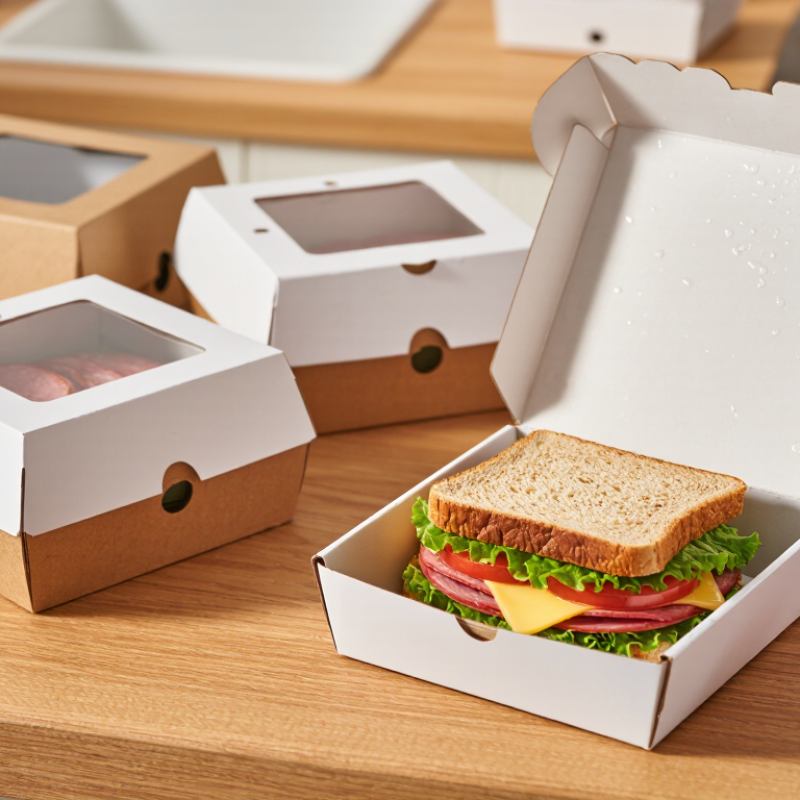
A well-designed Sandwich Box keeps bread, fillings, and fresh vegetables positioned during delivery. Food-grade paperboard can provide a clean surface for direct food contact. Grease-resistant coatings help prevent sauces from soaking through during busy lunch periods. A secure tuck closure also reduces accidental opening inside delivery bags. These details matter when orders travel across town on a warm afternoon.

The customer experience is visible.

Clear labeling can display ingredients, allergens, storage guidance, and your brand message. A printed box may turn a simple lunch into a recognizable business moment. However, printing quality, material sourcing, and recycling claims require careful verification. Local recycling facilities may not accept coated packaging. “Eco-friendly” should never be used without evidence.

In cafés and takeaway kitchens, box dimensions should match the sandwich size closely. Excess space can cause movement, while tight packaging may crush soft bread. Small ventilation features can reduce condensation, though they may affect heat retention. Testing different fillings is worthwhile. A toasted sandwich behaves differently from a cold one.

Sandwich Box packaging is not perfect for every menu. It may need stronger construction for heavy fillings or long-distance delivery. Yet, when material choice, design, hygiene, and branding work together, it can support a more reliable customer experience. The best decision comes from testing real products, reviewing supplier specifications, and listening to staff feedback.
Why Choose Sandwich Box Packaging for Your Business?

What Is Sandwich Box Packaging?

Sandwich box packaging is a food container designed to protect, present, and transport prepared sandwiches. It usually uses paperboard, corrugated board, or food-safe coated materials. The box folds around the sandwich, creating a clean barrier between the food and outside surfaces. Some designs include a clear window for product visibility. Others use small vents to release steam and reduce sogginess.

A well-designed box should fit the sandwich closely without crushing the bread. It should also resist light grease, moisture, and sauce leakage during delivery. In practical packaging tests, checking the corners matters because weak folds can open after handling. Food-contact materials must come from reliable suppliers and follow applicable safety requirements. Still, no box solves every problem. A very tight package may protect the sandwich but make opening awkward.

Tips: Match the box size to the sandwich. Add a liner for rich fillings. Test it after thirty minutes of transport. Check whether condensation gathers inside. Small details often affect freshness, stacking, and customer handling more than expected.

Businesses also use sandwich boxes to create a consistent serving experience. A neat structure can support labels, preparation details, and recycling guidance without overcrowding the surface. For takeaway counters, stackable shapes save space and reduce unnecessary movement. For delivery, stronger board may be worth the added cost. The best choice depends on filling weight, travel time, storage conditions, and disposal habits.

Key Materials and Designs Used in Sandwich Boxes

Why Choose Sandwich Box Packaging for Your Business?

Material selection shapes the sandwich experience. Kraft paperboard gives boxes a natural appearance and reliable stiffness. Solid bleached paperboard offers a smoother surface for clear printing. Corrugated board adds protection when sandwiches need longer transport. Each material performs differently around moisture, oil, and pressure. A food-contact coating can reduce grease seepage, but it should match local packaging requirements. Recyclability also depends on the coating, adhesive, and recycling facilities available nearby.

Design details matter just as much. Locking tabs can replace plastic fasteners and keep the lid secure. Small ventilation openings help release steam from warm fillings. A clear window improves product visibility, although it may reduce recycling simplicity. The box should fit the sandwich closely without crushing bread or wasting space. In practical testing, a slightly loose lid often causes more movement than expected. That small flaw deserves attention.

Tips: Test filled boxes for at least thirty minutes. Check for leaks, soggy corners, and lid movement. Use chilled and warm sandwiches during trials. Measure stacking strength before ordering large quantities. Keep labels readable, even when condensation appears. A window looks appealing. It is not always necessary. Ask suppliers for food-contact documentation and material specifications. Do not rely only on appearance; touch, seal, and transport tests reveal weaknesses.

How Sandwich Boxes Protect Food and Preserve Freshness

Why Choose Sandwich Box Packaging for Your Business?

A sandwich box does more than hold food. It creates a protective space between the meal and outside pressure. A well-fitted box helps prevent crushed bread, leaking fillings, and messy handling. Food-grade paperboard provides a clean inner surface for direct food contact. Its firm structure also keeps sandwiches stable during short deliveries and counter display.

Moisture matters. Fresh vegetables, sauces, and warm fillings can soften bread quickly. Some sandwich boxes use ventilation openings to release excess steam. This helps reduce sogginess without leaving the food exposed. During packing checks, I look for secure closures and enough room around the sandwich. Excess space allows movement, while a tight fit can damage delicate ingredients. The lid should close evenly, without pressing the top slice.

Not every box performs equally. Board thickness, coating, and folding quality all affect freshness. A box with weak corners may collapse before reaching the customer. Poor ventilation can also create condensation inside the package. In practical testing, packers should check the box after stacking, carrying, and brief refrigeration. Cold ingredients may also release water as temperatures change. A sandwich box cannot fix careless preparation. It can, however, support better food handling when its size and structure match the product. Small details matter.

Business Benefits of Using Sandwich Box Packaging

Why Choose Sandwich Box Packaging for Your Business?

Sandwich box packaging can make daily food service cleaner, faster, and more consistent. A firm box protects soft bread during delivery and reduces crushed corners. It also gives staff a clear packing routine during busy lunch periods. Customers can see a neat product before opening the lid. That small detail can influence repeat purchases. Practical experience shows that stable boxes are easier to stack in delivery bags. They also help separate sandwiches from sauces, fruit, and chilled drinks. Less mess usually means fewer complaints.

Tips: Choose food-safe board with suitable grease resistance. Test the box with your heaviest sandwich. Check the lid after thirty minutes of transport. Add a simple label for ingredients and storage advice. Avoid oversized boxes, because empty space can make food move. Small changes matter.

Packaging can support a stronger business identity without expensive extras. A clean surface allows readable product information and simple design choices. It may also reduce preparation time when boxes fold quickly and close securely. However, packaging is not automatically sustainable. Material claims need verification, and local recycling facilities may differ. That part is easy to overlook. A business should test packaging in real conditions, including condensation, warm fillings, and delivery delays. One weakness remains: premium boxes can cost more. The decision should balance protection, labor savings, customer experience, and actual disposal options.

Why Choose Sandwich Box Packaging for Your Business? - Business Benefits of Using Sandwich Box Packaging
Business Dimension Relevant Data or Standard Business Benefit Practical Application Reference
Food-contact suitability Paper and paperboard used for food packaging are covered by food-contact requirements, including restrictions on substances that may migrate into food. Supports safer packaging decisions and helps businesses establish documented compliance procedures. Request food-contact declarations and migration-test documentation from packaging suppliers before production. U.S. FDA, 21 CFR Part 176
Recyclability potential In the United States, paper and paperboard containers and packaging had an 80.9% recycling rate in 2018, according to national waste statistics. Paper-based sandwich boxes can support recycling-oriented packaging strategies when they are free from excessive food residue and unsuitable mixed materials. Use recyclable paperboard structures, minimize plastic components, and provide clear disposal guidance where appropriate. U.S. EPA, Containers and Packaging Data
Flat-pack storage efficiency Folding paperboard boxes are commonly supplied flat and assembled at the point of packing, unlike many rigid pre-formed containers. Flat delivery can reduce unused air during storage and transportation and can improve back-of-house organization. Compare supplier carton dimensions in flat-packed form and calculate storage requirements using the actual order quantity. ISO 18602:2013, Packaging Optimization
Material optimization Packaging optimization standards consider material use, volume, mass, performance, and product protection together rather than focusing on material reduction alone. A correctly engineered sandwich box can reduce unnecessary material while maintaining stiffness, closure performance, and food protection. Specify board grade, dimensions, locking tabs, and ventilation features according to sandwich weight, moisture, and distribution conditions. ISO 18602:2013, Packaging Optimization
Product protection Packaging performance is evaluated through factors such as compression, vibration, impact, moisture, and distribution handling. A purpose-designed box helps reduce crushing, shifting, leakage, and presentation damage during handling and delivery. Test filled boxes under stacking, transport, and temperature conditions that match the intended sales channel. ISO 12048, Packaging Compression and Stacking Tests
Brand communication Paperboard provides printable surfaces for product names, ingredients, allergen information, handling instructions, and disposal guidance. The box becomes both a protective unit and an information surface, reducing the need for additional labels or inserts. Reserve clear print areas for mandatory information and use high-contrast typography for quick customer recognition. FAO, Food Labelling and Packaging Guidance
Portion and menu flexibility Paperboard cartons can be manufactured in different footprints, depths, locking styles, and ventilation configurations. One packaging platform can be adapted for different sandwich sizes, fillings, meal combinations, and sales occasions. Standardize common design elements while varying only the dimensions or printed panels required for each product line. ISO 18602:2013, Packaging Optimization
Operational speed Pre-cut folding cartons with locking tabs can be erected without separate adhesive application during routine packing operations. Simple assembly can support consistent packing procedures and reduce the number of packaging steps. Measure assembly time, closure reliability, and packing-line error rates during a controlled trial before full adoption. ISO 18602:2013, Packaging Optimization
Moisture and grease management Paperboard performance can change when exposed to moisture or oil; coatings, liners, and board specifications must therefore match the food application. Correct material selection helps preserve box strength and appearance for sandwiches containing sauces, fresh vegetables, or oily ingredients. Conduct tests using the actual recipe, filling temperature, holding time, and delivery duration rather than relying only on empty-box testing. U.S. FDA, Food Contact Substances
End-of-life communication Recycling and composting outcomes depend on local collection systems, material composition, coatings, food contamination, and facility capability. Accurate disposal instructions reduce customer confusion and help prevent unsupported environmental claims. Verify local waste-management requirements before printing recycling, compostability, or other environmental statements. U.S. FTC, Green Guides
Data note: Performance, recyclability, and food-contact suitability depend on the specific paperboard grade, coating, adhesive, printing system, product recipe, and local waste infrastructure. Test the complete packaging system before commercial launch.

How to Choose the Right Sandwich Box for Your Products

Choosing the right sandwich box starts with the product, not the package design. Measure the sandwich after filling, including sauces, vegetables, and uneven edges. A tight box can crush bread and squeeze ingredients onto the lid. A loose box allows sliding during delivery. Neither result feels professional.

Use food-contact-safe board from a supplier who provides clear compliance documents. Moisture-resistant coating helps protect the box from sauces and fresh vegetables. However, heavy coating may reduce recyclability, so check local disposal requirements. Ventilation also matters. Small vents can reduce condensation, while too many may dry the bread. Test the box with a warm sandwich for at least thirty minutes. Real handling reveals problems that a catalogue image hides.

Consider how customers will open, carry, and store the sandwich. Locking tabs should close firmly without tearing the board. A clear window can show freshness, but it may weaken the lid if poorly designed. Choose dimensions that fit your bags and delivery shelves. I still get this wrong sometimes. A box that looks efficient in a sample order may waste space in larger batches. Order prototypes, stack filled boxes, and check corner strength before committing. Ask the packaging supplier about print safety, minimum order quantities, and production consistency. Record the test results, including leaks, crushed corners, and temperature changes, before selecting the final format.

ACCESS ABILITY Home Medical Store has a Beautiful showroom in Cudahy To Serve You!

Corporate Office And Store
Cudahy, Wisconsin

1995 E Norse Ave
Cudahy, WI 53110
Phone: 414-486-6249
Fax: 414-486-5728