CALL TODAY for FREE In home consultation
SEND EMAIL
1995 East Norse Avenue
Cudahy, Wisconsin 53110
414-727-2524
4445 W Forest Home Avenue
Milwaukee, Wisconsin 53219
414-727-2525
2140 American Drive
Neenah, Wisconsin 54956
920-257-6060
65 Copeland Avenue
La Crosse, Wisconsin 54603
608-784-9980
Choosing the right To Go Containers can shape a customer’s entire takeout experience. A secure lid prevents spills before the meal reaches the car. Proper ventilation protects fried foods from turning soft inside trapped steam. Clear labeling also helps staff and customers identify meals quickly during busy service.
The best option depends on the food, delivery time, and serving temperature. Soup needs a leak-resistant container with a dependable seal. Salads often need separate compartments for dressing and crisp toppings. Burgers require enough space to avoid crushed buns. Microwave-safe materials can add convenience, but restaurants should follow the manufacturer’s heating guidance carefully. Food-safe paperboard, molded fiber, plastic, and aluminum each offer practical advantages. None is perfect.
Real-world testing matters more than attractive packaging claims. Fill each container with a typical portion, close it, and carry it across the kitchen. Then check for leaks, condensation, heat loss, and damaged corners. A container may perform well during a short pickup but fail during a longer delivery. That possibility deserves attention. Staff feedback can reveal problems that product specifications miss. Cost also matters, yet the cheapest option may create waste through spills, remakes, or poor presentation. Reliable choices balance protection, usability, sustainability, and customer expectations. This guide examines leading takeout containers through those practical details, helping food businesses make informed decisions without relying on marketing language alone.
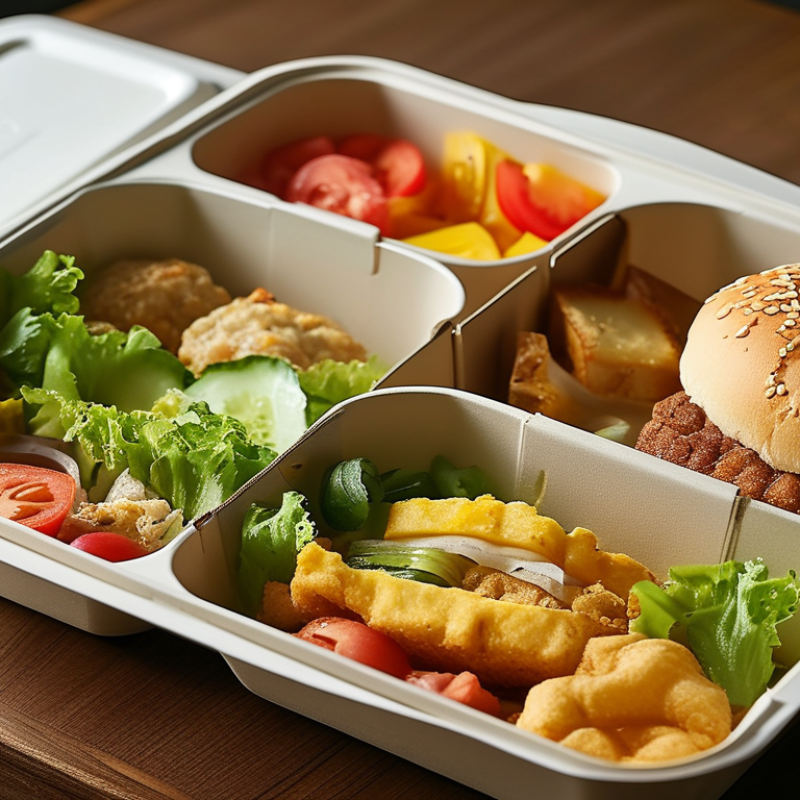
The right to-go container depends on food texture, temperature, and travel time. The National Restaurant Association’s 2024 State of the Restaurant Industry report projected U.S. restaurant sales above $1 trillion, with off-premises dining remaining a major habit. That scale makes packaging performance more than a visual detail.
Crisp fried chicken, fries, and tempura need vented fiber clamshells. Small vents release steam and reduce sogginess. They still need space around the food. Overfilling defeats the design.
Saucy pasta, curries, and rice dishes fit better in leak-resistant polypropylene bowls with tight lids. For meals with separate toppings, compartment trays protect texture and prevent sauces from spreading. Noodles often travel well in paperboard bowls with wide openings, but weak lids can fail during delivery.
Cold salads and desserts need rigid containers that resist crushing and condensation. Clear lids help staff check portions quickly, while absorbent liners can protect sandwiches from moisture. The FDA Food Code 2022 recommends holding hot food at 135°F or above and cold food at 41°F or below; containers should support that time and temperature control, not replace it. Material claims also require care. A 2023 report from the Foodservice Packaging Institute noted continuing interest in recyclable and compostable formats, yet local recycling and composting systems vary widely. A container may look sustainable and still lack a practical recovery route.
Takeout containers must protect food, control moisture, and remain comfortable to carry. Material choice affects each function. Paperboard containers are lightweight and suitable for fried meals, sandwiches, and noodles. However, untreated paper softens quickly when exposed to sauces. A thin water-resistant lining improves performance, but it can complicate recycling. Molded fiber offers a firm, natural texture and handles moderate heat well. Its rough surface may absorb oily sauces, though.
Plastic containers resist leaks and show the food clearly. They work well for soups, salads, and meals needing tight lids. Heat tolerance varies, so food-service workers should check the container’s specifications. I once used a container that warped under very hot curry. The lid still closed, but the base felt unsafe. That mistake changed how I assess packaging. “Microwave-safe” should never be assumed.
Tips: Match the material to the meal. Use leak-resistant designs for broth, and vented lids for steaming food. Test one filled container before ordering in bulk. Check the seal, hinge, stacking strength, and surface temperature. Also, confirm local recycling or composting options. A compostable container may not break down without the right commercial facility. Small details matter.
Key materials used in takeout food containers, compared by typical material density
Polypropylene and expanded polystyrene are lightweight options commonly used for hot or insulated meals. PET is clear and rigid, molded fiber is plant-based and commonly used for disposable trays, and aluminum provides high heat resistance. Density values are approximate typical material values in grams per cubic centimeter (g/cm³).
Matching a container to food texture and temperature protects quality during delivery. The 2024 National Restaurant Association report found that 47% of adults pick up takeout weekly. That frequency makes packaging a service decision, not a minor detail.
Hot food needs heat-resistant containers with secure lids. For fried chicken, fries, or tempura, small vents release steam and reduce sogginess. However, too many vents can cool food quickly. It is a trade-off.
I learned this after testing fries in fully sealed boxes; they arrived warm but soft.
Saucy dishes need rigid, leak-resistant containers with enough headspace. Otherwise, pressure and movement can force sauce under the lid.
The FDA Food Code sets 135°F as the minimum hot-holding temperature and 41°F as the maximum cold-holding temperature. Containers cannot replace proper temperature control.
Cold foods require different choices. Salads keep their texture better in rigid containers, with dressing packed separately. Yogurt, fruit, and chilled noodles need containers that resist condensation and crushing.
The 2023 Sustainable Packaging Coalition report emphasizes designing packaging for its actual use, including material performance and recovery conditions. Compostable-looking packaging is not automatically suitable for hot, oily meals.
I still find that some containers perform differently after ten minutes in transit. Testing with real portions, sauces, and travel times remains essential. Content that looks perfect in a kitchen may fail on a passenger seat.
What Are the Top To Go Containers for Takeout Food?
The best takeout containers protect food quality and reduce handling risks. The National Restaurant Association’s 2024 State of the Restaurant Industry report states that nearly 75% of restaurant traffic now happens off-premises. That shift makes packaging a service tool, not an afterthought. Vented lids help fried foods stay crisp by releasing steam. Leak-resistant seals protect bags, counters, and customers. Small details matter. Containers should also stack securely and fit standard delivery bags. Clear labeling improves order accuracy and supports safer storage.
Temperature control remains essential. The FDA Food Code 2022 recommends holding cold foods at 41°F or below and hot foods at 135°F or above. A container cannot replace proper kitchen procedures. However, tight closures, suitable insulation, and separated compartments can slow temperature changes. Microwave-safe materials may improve convenience, but staff should verify heating instructions. I would not treat every “microwave friendly” claim as automatic. Materials, lid design, and food type can behave differently.
Tips: Test each container with soup, sauce, and fried food. Test it hot. Check for leaks after ten minutes. Then stack several filled units to reveal weak corners or slipping lids. Choose nesting designs when storage space is limited. Use tamper-evident closures when order security matters. Some teams focus heavily on appearance and overlook disposal instructions. That is worth reconsidering. Recyclability claims can depend on local collection systems, so confirm them with municipal guidance and the supplier’s technical documentation.
What Are the Top To Go Containers for Takeout Food?
Choosing the Best Container for Cost, Sustainability, and Branding
A strong takeout container must protect food, control costs, and support a clear brand image. In daily service, paperboard containers suit dry meals, sandwiches, and baked foods. For soups or saucy dishes, leak-resistant fiber or recyclable plastic can perform better. The cheapest option may fail when lids loosen, food spills, or containers soften during delivery.
Test containers with real portions, not empty samples. Fill one with hot noodles, another with curry, and place both in delivery bags for thirty minutes. Check leaks, temperature, stacking, and customer handling. A container that looks sustainable but collapses under steam creates waste and complaints. That matters.
Sustainability depends on the whole system. Lightweight packaging usually reduces material use and shipping weight. Reusable systems can work well in closed delivery areas, but collection and washing require labor, water, and strict hygiene controls. Compostable options need suitable local facilities; otherwise, their environmental benefit may be limited. This detail is easy to overlook.
Branding does not require expensive printing. A clean label, consistent color, or simple message can make packaging recognizable. Leave enough space for heating instructions, allergens, order details, and disposal guidance. Food-contact materials should come from reliable suppliers with documented safety information. Ask for test results and confirm performance before making large purchases. I have found that beautiful packaging often receives attention, while practical packaging earns repeat orders. Both matter.
| Container Type | Typical Unit Cost (USD, bulk estimate) | Best Food Applications | Leak & Grease Resistance | Heat & Microwave Suitability | Sustainability Considerations | Branding Potential |
|---|---|---|---|---|---|---|
| Molded Fiber Clamshell | $0.18–$0.45 | Rice dishes, fried foods, sandwiches, salads, and combination meals | Good for normal moisture and grease; heavy sauces may require a coating or liner | Generally suitable for hot food; microwave use depends on the product specification and additives | Often made from renewable plant fibers; commercial compostability requires accepted facilities and suitable certification | Moderate; printing and custom molding are possible, but usually cost more than labels or stickers |
| Uncoated Kraft Paper Box | $0.12–$0.35 | Dry snacks, bakery items, sandwiches, noodles, and low-sauce meals | Fair to moderate; absorbs oil and moisture unless designed with a grease-resistant treatment | Suitable for hot food; microwave use should be confirmed because inks, coatings, and closures differ | Paper-based and commonly recyclable when clean and free of plastic or foil laminates; soiled paper may be rejected | High; large printable surfaces support one-color, multi-color, stamps, sleeves, and stickers |
| Coated Paperboard Takeout Box | $0.16–$0.40 | Saucy meals, pasta, noodles, curries, and takeaway portions with folding lids | Good when grease-resistant; performance depends on the coating, seams, and closure design | Usually suitable for hot food; only microwave products specifically marked for microwave use | Fiber recovery can be reduced by plastic or chemical barriers; check local recycling rules and coating composition | High; smooth surfaces provide strong opportunities for printed graphics, menu information, and QR codes |
| Polypropylene Container | $0.20–$0.60 | Soups, curries, pasta, meal prep, and foods requiring a tight-fitting lid | Very good resistance to liquids, grease, and impact when properly sealed | Commonly suitable for hot food and microwave reheating when labeled accordingly; venting may be needed | Durable and lightweight; recycling availability varies widely, and single-use formats may have limited recovery | Moderate; in-mold decoration, printed lids, adhesive labels, and sleeves are practical options |
| Recycled PET Clear Container | $0.15–$0.45 | Cold salads, fruit, desserts, sandwiches, and chilled prepared foods | Good for cold foods and moderate moisture; not ideal for very hot or oily meals | Generally not intended for microwave heating; heat limits depend on the specific PET design | Clear PET is recyclable in some systems; recycled content can reduce demand for virgin plastic where verified | High visibility; clear packaging supports product display, while labels and sleeves provide branding space |
| Aluminum Tray with Paperboard Lid | $0.25–$0.70 | Roasted meals, baked dishes, casseroles, and foods requiring oven finishing | Excellent resistance to grease, heat, and liquids; lid fit affects transport security | Suitable for conventional ovens when specified; never place aluminum in a microwave unless the appliance and container instructions explicitly allow it | Aluminum can be recycled repeatedly where collection exists; recycling generally requires separation from food residue and paper components | Moderate; paperboard lids and adhesive labels offer more branding space than the metal tray |
| Reusable Polypropylene Container | $1.00–$4.00 | Returnable meal programs, catering, institutional foodservice, and repeat customers | Very good when the lid and seal are designed for repeated use | Often microwave- and dishwasher-compatible when labeled; verify temperature limits and ventilation guidance | Higher upfront cost but potentially lower packaging waste over multiple verified reuse cycles; washing requires water, energy, and logistics | High; durable printing, molded marks, QR codes, and return-program messaging can reinforce brand recognition |
1995 E Norse Ave
Cudahy, WI 53110
Phone: 414-486-6249
Fax: 414-486-5728