CALL TODAY for FREE In home consultation
SEND EMAIL
1995 East Norse Avenue
Cudahy, Wisconsin 53110
414-727-2524
4445 W Forest Home Avenue
Milwaukee, Wisconsin 53219
414-727-2525
2140 American Drive
Neenah, Wisconsin 54956
920-257-6060
65 Copeland Avenue
La Crosse, Wisconsin 54603
608-784-9980
Choosing China’s best home medical equipment suppliers requires more than comparing catalogues or factory prices. A dependable partner should understand patient safety, caregiver needs, product usability, and long-term service. Look for manufacturers with documented quality systems, relevant NMPA registration, ISO 13485 certification, traceable materials, and transparent testing records. Certifications alone are not enough. Their real value appears in consistent production and responsive support.
Dr. Joseph G. Ouslander, a respected geriatrician and home-care researcher, has said, “The home is where older adults want to receive care.” This simple observation matters when evaluating home medical products. A walking aid should feel stable on a narrow hallway floor. A patient lift should operate smoothly beside a bed. A home oxygen device should have clear alarms and understandable instructions. Practical details often reveal a supplier’s experience better than polished marketing.
Strong Chinese suppliers usually provide product customization, sample testing, user manuals, spare parts, and training for distributors. They should also explain delivery times, warranty limits, complaint handling, and maintenance procedures without hiding difficult answers. Buyers may compare factories in Guangdong, Jiangsu, Zhejiang, and other manufacturing regions, but location does not guarantee quality. Some smaller suppliers offer excellent engineering, while larger companies may provide stronger capacity and documentation. The choice is not always obvious.
Independent audits, video factory reviews, batch records, and reference customers can reduce uncertainty. Still, no supplier is perfect. Even experienced buyers can overlook after-sales delays or poorly translated instructions. A careful evaluation should therefore combine technical evidence, direct communication, and real product trials before a long-term agreement.
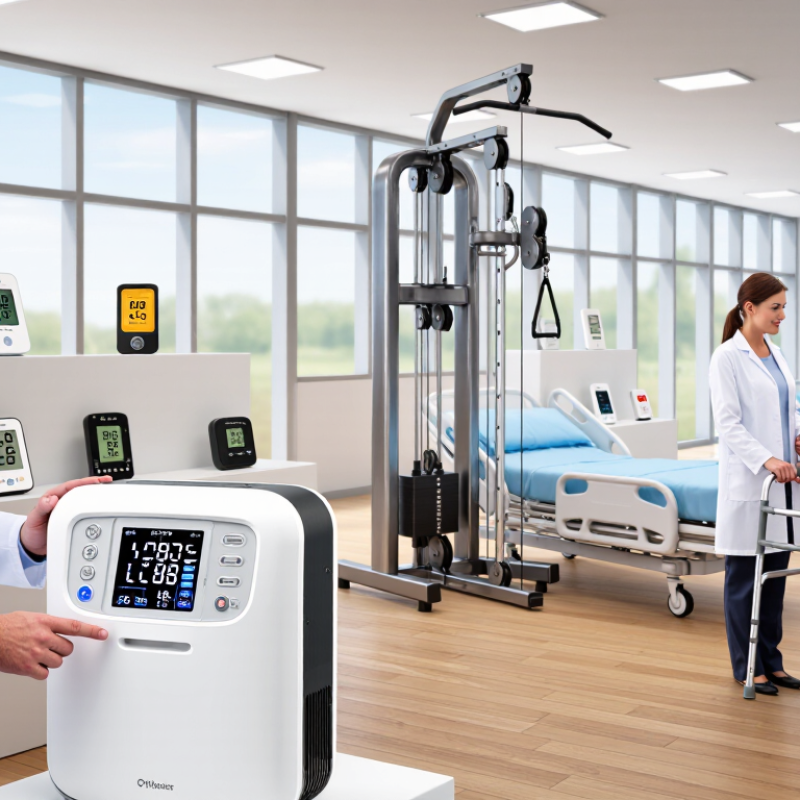
China supplies a broad range of home medical equipment for elderly care, rehabilitation, and daily monitoring. Common products include adjustable homecare beds, wheelchairs, walkers, commode chairs, and patient lifts. Many suppliers also manufacture blood pressure monitors, glucose meters, pulse oximeters, digital thermometers, and ECG devices. Respiratory products may include oxygen concentrators, nebulizers, and suction machines. These categories support different care needs, from recovery after surgery to long-term mobility assistance.
Experienced buyers should check more than product photos. Reliable suppliers can provide test reports, user manuals, calibration records, and clear maintenance instructions. For powered equipment, ask about battery life, noise levels, emergency operation, and replacement parts. For monitoring devices, accuracy testing matters greatly. A small reading error can affect a treatment decision. Factory audits and sample inspections can reveal packaging weaknesses, unclear labels, or inconsistent assembly. One practical lesson is that attractive pricing does not always mean lower risk. I have seen purchasing plans overlook after-sales training, which later caused avoidable delays.
Tips: Match each product with the user’s condition and home layout. Measure doorways before ordering beds or wheelchairs. Request a working sample before bulk purchasing. Confirm electrical specifications and local compliance requirements. Keep written records of warranties, spare parts, and response times. Some suppliers communicate well before payment, but support may become slower afterward. Ask direct questions early.
A reliable Chinese home medical equipment supplier should be judged by evidence, not catalog size. The WHO Global Atlas of Medical Devices reports more than two million medical device types worldwide, grouped into over 7,000 categories. This complexity makes product classification and documentation essential. Ask for valid NMPA registration, applicable export approvals, and clear device labeling. Check whether the certificate matches the exact model.
Look for an ISO 13485 quality management system, but do not stop there. Review complaint handling, corrective actions, supplier controls, and batch traceability. For electrical equipment, request test records aligned with IEC 60601-1. Risk files should follow ISO 14971 principles. A serious supplier can show calibration records, incoming inspection data, and packaging validation.
Small details matter.
Visit the factory if possible. Watch how operators record serial numbers and isolate rejected parts. Ask for a recent audit report, not a polished presentation. WHO guidance stresses that regulatory oversight must continue after market entry, so post-market surveillance deserves careful review. Remote audits save time, but they can miss weak warehouse controls. I have found translated documents useful, though not always precise. An independent technical review may expose gaps before purchase. Keep samples from every approval batch. Mistakes happen. Suppliers should respond with evidence, timelines, and measurable corrective action.
China’s home medical equipment sector includes several practical supplier categories. Mobility manufacturers produce walkers, wheelchairs, transfer aids, and adjustable beds. Respiratory equipment suppliers focus on oxygen concentrators, nebulizers, and related accessories. Other factories specialize in patient monitors, rehabilitation products, bathroom safety aids, or daily-care furniture.
Manufacturing strengths often depend on product complexity. Mature suppliers may offer in-house tooling, electronic assembly, injection molding, and controlled final testing. Some support OEM and ODM projects with engineering teams and small pilot runs. Traceable components, inspection records, and calibrated testing equipment are strong reliability signals. However, a polished factory tour proves little by itself. Buyers should verify production capacity, quality procedures, and applicable market approvals through current documents. A low price can hide inconsistent materials or weak after-sales support.
Tips: Request sample units from different batches. Check noise, battery life, control labels, packaging, and cleaning surfaces. Ask how complaints are recorded and corrected. Review the supplier’s factory audit, test reports, and delivery history. Do not rely on certificates alone. A useful supplier should explain limitations clearly, although some sales teams still avoid difficult questions. Consider a small trial order before committing to larger volumes.
China Best Home Medical Equipment Suppliers?
Quality Control, Certifications, and Product Safety
Choosing a home medical equipment supplier requires more than comparing prices. In supplier evaluations, I look for documented quality controls at every production stage. Incoming materials should be checked against specifications. Assembly records should identify operators, dates, and batch numbers. Final inspections should test function, labeling, packaging, and electrical safety where applicable.
Certifications need careful verification. A supplier may hold ISO 13485 certification, but its certificate should cover the relevant products and facilities. Market-specific approvals may also apply, depending on the destination country. Check the certificate number, validity period, issuing organization, and scope. Do not accept a logo on a brochure as evidence. Ask for controlled documents and recent audit records.
Product safety depends on daily discipline. Risk assessments should address overheating, incorrect use, cleaning, storage, and foreseeable misuse. Suppliers should maintain complaint procedures, corrective actions, and traceability from components to finished units. Ask how failed samples are isolated. Ask who approves a production change.
Small details matter.
A factory can pass an audit and still make mistakes. That is an uncomfortable reality. I would request sample testing, review inspection data, and repeat checks after design changes. Some suppliers may provide polished documents but weak shop-floor control. Direct video inspections and independent laboratory testing can reveal that gap. A reliable partner answers difficult questions clearly and accepts reasonable verification.
The chart compares the publication years of widely used international quality-control, risk-management, usability, and electrical-safety standards for medical devices. Suppliers should provide applicable certificates, test reports, technical files, and declarations of conformity; the latest standard edition alone does not prove product compliance.
Selecting a reliable Chinese home medical equipment supplier starts with intended use, not the lowest quotation. The WHO Global Report on Assistive Technology (2022) estimates that over 2.5 billion people need assistive products. OECD Health at a Glance 2023 reports that older people represented 18% of OECD populations in 2021, potentially reaching 27% by 2050. Demand is becoming more specific.
Ask suppliers to provide product classifications, applicable NMPA registration, ISO 13485 certification, and destination-market compliance documents.
Ask for evidence.
Request a production sample before signing a large order. Inspect enclosure seams, label durability, alarm clarity, battery backup, and cleaning instructions. Require batch traceability from incoming components to final inspection.
Independent testing should cover electrical safety, electromagnetic compatibility, biocompatibility, or performance where applicable. Review calibration records and previous nonconformity reports.
A video factory tour helps.
An on-site audit is stronger.
The ISO Survey 2023 records more than 35,000 ISO 13485 certificates worldwide. Certification is useful, but it does not prove dependable delivery.
Check complaint handling, corrective-action procedures, spare-parts availability, warranty terms, and response times. Request recent quality records with sensitive information removed.
Some checks feel excessive. They are cheaper than discovering unstable readings after shipment.
No checklist is perfect. A supplier that welcomes technical questions, admits production limits, and explains improvements is usually more trustworthy than one offering flawless promises.
1995 E Norse Ave
Cudahy, WI 53110
Phone: 414-486-6249
Fax: 414-486-5728