How to Choose Eco Disposable Paper Products?

Choosing Eco Disposable Paper products is not simply a matter of selecting brown packaging. A natural appearance can hide plastic coatings, weak fibers, or unclear sourcing. The better choice begins with evidence: certified forests, recycled content, food-contact safety, and realistic disposal instructions. Product performance matters too. A leaking soup container creates waste, even when its label says “eco.”

Ellen MacArthur, founder of the Ellen MacArthur Foundation, explains the wider responsibility clearly: “A circular economy is based on the principles of designing out waste and pollution, keeping products and materials in use, and regenerating natural systems.” Her words apply directly to Eco Disposable Paper. Buyers should examine the complete journey, from forest management to manufacturing, transport, use, and end-of-life recovery. Look closely. A thin paper cup may contain a difficult-to-recycle lining. A heavy plate may use more material than necessary. Neither choice is automatically sustainable.

Practical experience also reveals uncomfortable limits. Recycling access differs between cities. Food residue can reduce recovery quality. Compostable items may fail when commercial composting is unavailable. This is where careful comparison matters. Ask suppliers for certificates, material specifications, coating details, and disposal guidance. Request test results for strength, heat resistance, and leakage. Do not rely on green colors or vague claims.

There is no perfect product.

The responsible option balances verified environmental benefits with actual user needs. This guide will help readers compare Eco Disposable Paper products with clearer judgment, fewer assumptions, and a willingness to question attractive promises.
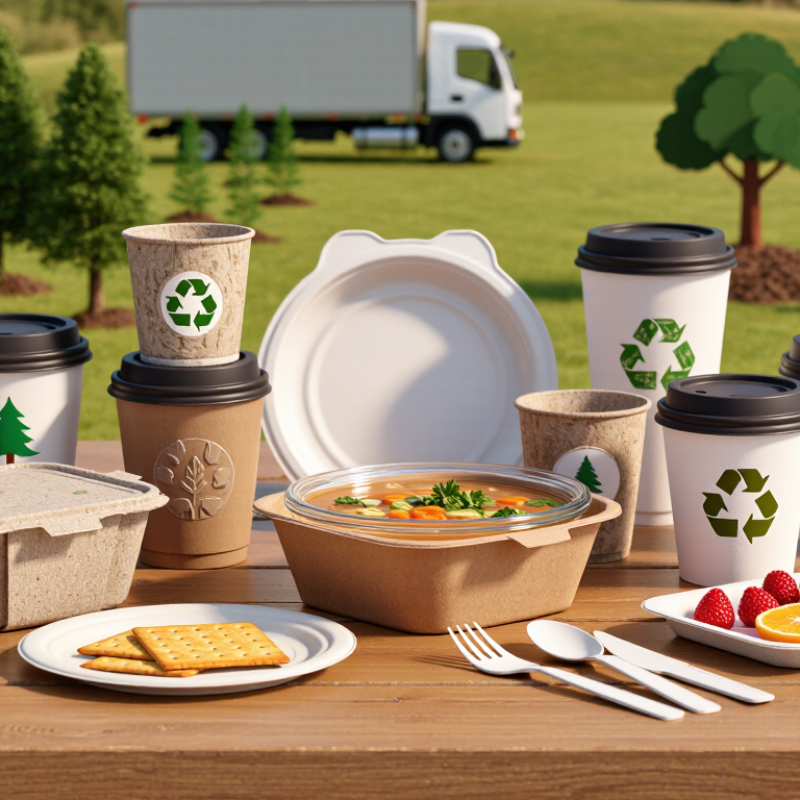
How to Choose Eco Disposable Paper Products?

Understanding Eco Disposable Paper Products

Eco disposable paper products are designed to reduce reliance on conventional plastic items, but “eco” does not describe one specific material. Cups, napkins, plates, and takeaway boxes may use recycled fiber, responsibly sourced virgin pulp, or plant-based coatings. Their environmental impact depends on how they are made and what happens after use. A paper cup with a plastic lining, for example, may not be accepted in ordinary paper recycling. Looks simple. Disposal can be less simple.

When choosing products, check the material description and the disposal instructions rather than relying on green wording alone. Look for clear information about recycled content, fiber sourcing, and coatings. Also consider the job: a greasy meal needs stronger packaging than a dry pastry. In practice, the most sustainable choice is often the lightest item that still works without leaking or tearing. I used to assume paper meant easy recycling; that was too broad an assumption. Local collection rules vary, and food residue can affect sorting.

Tips: Match the product to the food, check whether its coating is explained, and confirm local disposal options. Test a sample with hot soup or a damp napkin before ordering in bulk. Keep claims specific, and ask suppliers for supporting details when information is vague.

Identifying Sustainable Materials and Certifications

How to Choose Eco Disposable Paper Products?

Identifying Sustainable Materials and Certifications

A paper cup can look natural and still raise hard questions. Check whether its fiber comes from responsibly managed forests, recycled content, or both. FSC and PEFC chain-of-custody certifications trace certified material through the supply chain; they do not prove that every part of a finished item is sustainable. Ask suppliers for product-specific documentation, not just a forest logo. Details matter.

Recycled fiber can reduce demand for virgin pulp, but food-contact items may need special materials or barriers. Look closely at linings, coatings, and adhesives: a paper tray with a plastic lining may not be accepted in local paper recycling. The US Environmental Protection Agency reported that 68.2% of paper and paperboard waste was recycled in 2018. That national figure is useful context, not a promise that your used cup will be recycled.

For products marketed as compostable, seek certification against a recognized standard, such as ASTM D6400 or EN 13432, and check whether it covers the finished item. Compostable does not mean suitable for home composting; many certified products require industrial conditions. Ask what local facilities actually accept. I have seen labels create more confidence than the disposal system deserves. A little doubt is healthy.

How to Choose Eco Disposable Paper Products?

Compostability standards set time-based thresholds for biodegradation and disintegration. The chart compares commonly cited test limits in EN 13432 and ASTM D6400; certification applies to the tested product under specified conditions.

Selection tip: Check the product’s certification and whether it is suitable for your local composting facilities. FSC or PEFC certification can help verify responsible forest sourcing, but does not by itself certify compostability.

Comparing Product Function, Safety, and Durability

Choosing eco disposable paper products starts with the job they need to do. A napkin, hot-drink cup, and takeaway bowl face different demands. Check whether the item is intended for hot, cold, oily, or wet foods. A cup that holds coffee well may soften when used for soup. Try a small sample with the actual food and serving time. A short test can reveal leaks, soggy edges, or a lid that slips.

Safety depends on clear, specific product information. Look for stated food-contact suitability and follow any temperature or use limits printed on the packaging. “Compostable” does not automatically mean suitable for every disposal route. Local facilities may not accept coated or mixed-material products. If details are vague, ask the supplier for documentation rather than guessing. That extra step can feel tedious, but it matters.

Durability is more than thickness. Press a bowl gently, carry it with a realistic portion, and check whether it bends or seeps. Compare performance after several minutes, not just straight out of the package. Heavier paper may feel reassuring, yet it can use more material without improving the experience. I have found that the best choice is not always the sturdier one; sometimes a lighter item works perfectly. There is no universal winner. Balance reliable function, verified safety information, and the disposal options people actually have.

How to Choose Eco Disposable Paper Products? — Comparing Product Function, Safety, and Durability

Product Type Typical Function Performance and Durability Food-Contact Safety Checks Environmental Considerations Best Suited For
Molded-fiber plates and bowls Serving solid foods, snacks, and some moist dishes. Generally sturdier than thin paper plates; performance varies with thickness, fiber blend, and any added barrier. Very wet or greasy foods may soften some products. Confirm the product is intended for food contact and follow its stated temperature and use limits. Check whether it has a coating or other treatment. Fiber-based products may be recyclable or compostable only where local facilities accept them. Food residue and coatings can affect disposal options. Events and takeout meals where a firm plate or bowl is needed.
Uncoated paper plates Holding dry snacks and low-moisture foods. Lightweight and convenient, but can bend or absorb liquid when used with heavy, wet, or oily foods. Choose products labeled for food contact; avoid using them beyond the stated heat or use limits. Clean, uncoated paper may be accepted in some paper-recycling programs; food-soiled items are often excluded. Check local rules. Dry foods, short serving periods, and situations where easy handling matters.
Coated paper cups Serving hot or cold beverages while limiting leakage. The lining helps resist liquid, but cup strength and heat performance depend on the design. Not all cups are suitable for every drink temperature. Verify food-contact suitability and the manufacturer’s temperature guidance. A lining may be present even when the cup looks like plain paper. Plastic-lined cups can be difficult to recycle in standard paper streams; specialized collection may be available in some areas. Takeaway beverages when leak resistance is important.
Paper food boxes and cartons Packaging sandwiches, baked goods, and takeaway meals. Good structural support when properly sized and assembled. Moisture and grease resistance varies, especially for unlined designs. Check food-contact labeling and instructions for hot, oily, or acidic foods. Do not assume a container is microwave-safe unless stated. Unlined, clean paperboard may be recyclable in some programs. Liners, windows, and food contamination can change disposal options. Dry or moderately moist foods and takeaway packaging.
Paper napkins and towels Wiping hands and absorbing small spills. Absorbency and tear resistance depend on ply, texture, and paper quality; products can lose strength when saturated. Use products intended for their stated purpose. Avoid using decorative or printed paper products with food unless they are labeled for food contact. Disposal and composting acceptance vary by local collection rules and contamination level. Dining, catering, and light cleanup.
Grease-resistant paper wraps Wrapping sandwiches, baked goods, and other oily foods. Designed to slow grease transfer; resistance varies by paper construction and treatment. It is not necessarily leakproof. Confirm food-contact suitability and any limits for hot or oily foods. Check product information for coatings or treatments. Grease-resistant treatments may affect recycling or composting acceptance. Follow local facility guidance. Wrapping individual foods when a flexible, lightweight package is preferred.

Selection tip: Compare products against the food, temperature, and time of use. Look for clear food-contact and disposal instructions, and verify recycling or composting acceptance with your local facility; material type alone does not guarantee acceptance.

Evaluating Manufacturing, Packaging, and Environmental Impact

How to Choose Eco Disposable Paper Products?

Evaluating manufacturing, packaging, and environmental impact

A paper plate is not automatically a low-impact choice. Check whether its fiber comes from responsibly managed forests or recycled sources, and ask how bleaching, water use, and factory energy are tracked. A supplier’s environmental statement is useful, but specific figures and independent verification are stronger evidence. Look for product-level data, not just a general claim about the company.

Packaging matters, too. A thin paper sleeve can still contain plastic film, coatings, or mixed materials that local facilities cannot process. Ask what each layer is made of and whether it is accepted in your area. The U.S. Environmental Protection Agency reported that 68.2% of paper and paperboard generated in the United States was recycled in 2018. That figure is encouraging, but it does not mean every disposable item is recyclable.

Consider the full journey. Manufacturing emissions, transport distance, food residue, and disposal conditions all affect real-world impact. Compare products using life-cycle assessments that state their assumptions, including energy sources and end-of-life options. A compostable label may mean little where commercial composting is unavailable. I would still want clearer, product-specific data before calling one option “green.” Even a smaller package helps only when its material can actually be recovered.

Choosing Suitable Products for Different Uses

Choosing suitable disposable paper products starts with the job they must do. For dry bakery items, uncoated paper bags can work well; greasy pastries may need a grease-resistant wrap. Takeaway soups require leak-resistant bowls and secure lids, while cold drinks often suit paper cups designed for condensation. Check the product’s intended use, heat tolerance, and disposal instructions. A cup that looks recyclable may have a lining that local facilities do not accept. Small details matter.

Match the material to local waste services, not just the label. The US Environmental Protection Agency reported that 68.2% of paper and paperboard generated in the United States was recycled in 2018. That national figure does not mean every food-soiled plate or lined cup can be recycled. Keep clean packaging separate where collection rules require it, and ask waste providers which items they actually accept. For busy service counters, clear sorting labels can reduce guesswork. They are not perfect, though; staff still need practical training. Test products with real portions and temperatures before ordering in bulk. A lid that leaks once can spoil the whole meal.

ACCESS ABILITY Home Medical Store has a Beautiful showroom in Cudahy To Serve You!

Corporate Office And Store
Cudahy, Wisconsin

1995 E Norse Ave
Cudahy, WI 53110
Phone: 414-486-6249
Fax: 414-486-5728