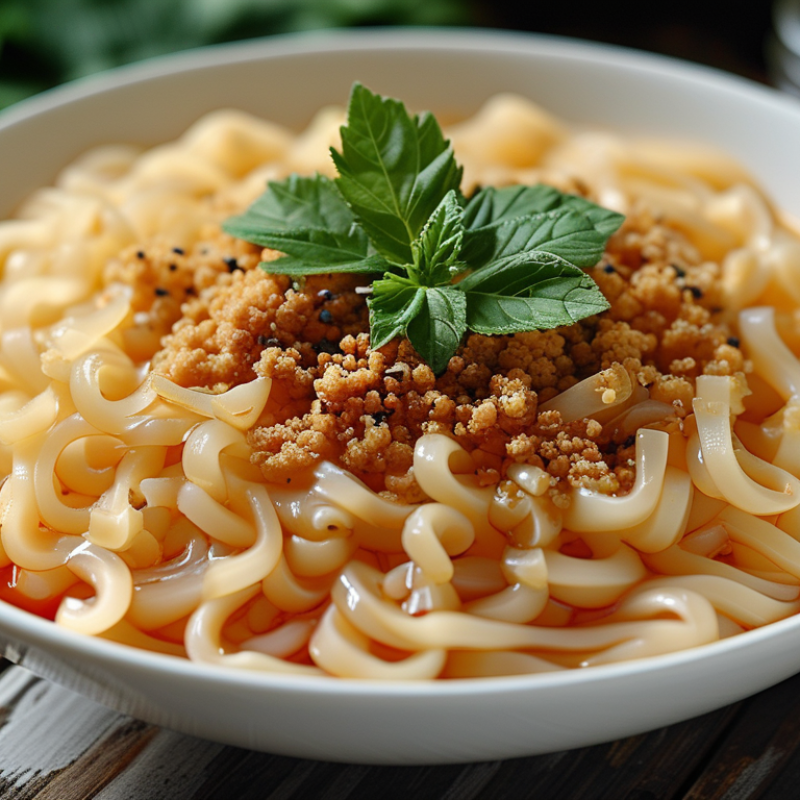
| Product identity | Konjac noodles made primarily from konjac glucomannan, water, and permitted processing ingredients. Define whether the product is sold as noodles, strands, rice-shaped pieces, or another noodle format. | Formula and product description must match the finished product, technical specification, packaging, and customs declaration. | Review formulation, process flow, finished-product sample, and ingredient statement. | Technical data sheet; formulation declaration; product specification; manufacturing process description. | Do not use “konjac” as a generic substitute for other low-calorie noodles unless the composition and labeling support the claim. |
| Ingredient composition | Record the percentage or range of konjac flour or konjac glucomannan, water, alkaline processing agent, acidity regulator, and any added fiber, starch, flavor, or coloring. | All ingredients must be permitted in the target market and declared in descending order by weight where required. | Compare supplier formula with laboratory testing and production-batch records. | Full ingredient declaration; allergen statement; additive declaration; specification revision history. | Formula changes can affect nutrition values, texture, customs classification, and regulatory status. |
| Noodle format | Define strand shape, diameter, length, cut style, color, surface appearance, and whether the product is plain, flavored, or mixed with vegetables or other ingredients. | Set measurable tolerances for strand dimensions, broken strands, clumping, discoloration, foreign matter, and package presentation. | Use a controlled sample, approved artwork, visual inspection, and dimensional checks. | Golden sample; product drawing; inspection standard; approved packaging mock-up. | Dimensions influence cooking behavior, consumer expectations, filling efficiency, and retail shelf presentation. |
| Pack style | Choose chilled, ambient shelf-stable, dried, or frozen format. Define retail pack size, foodservice pack size, case quantity, and net content. | Pack format must be suitable for the intended distribution temperature, shelf life, and sales channel. | Packaging validation, net-weight checks, seal inspection, and distribution simulation. | Packaging specification; pack-out diagram; net-content control plan; transport test report. | Ambient products generally simplify international distribution, but require validated thermal processing and shelf-life evidence. |
| Texture and cooking performance | Define firmness, elasticity, chewiness, hydration time, cooking loss, odor, and mouthfeel using a written sensory standard. | Each batch must remain within agreed sensory and physical limits after the stated preparation method. | Standardized cooking test, sensory panel, texture measurement where available, and comparison with the approved sample. | Cooking protocol; sensory scorecard; texture specification; batch release record. | Konjac products can vary with glucomannan concentration, pH, heat treatment, and storage conditions. |
| pH and processing controls | Define target pH range, alkaline treatment parameters, heating or sterilization conditions, cooling process, and water quality requirements. | Critical limits must be validated for product safety, texture, and shelf stability. | Review hazard analysis, process validation, calibration records, and batch monitoring data. | HACCP plan; process flow chart; critical-control-point records; calibration certificates. | Do not select a shelf-life period solely from similar products; validate the exact formula and process. |
| Microbiological safety | Set limits for relevant pathogens and indicator organisms according to the destination market and product category. | Testing must meet applicable legal limits and the buyer’s stricter internal specification where applicable. | Testing by a competent laboratory using recognized methods and representative samples. | Certificate of analysis; environmental monitoring records; sanitation verification; corrective-action reports. | Requirements differ for shelf-stable, refrigerated, and ready-to-eat foods. Define the category before requesting quotations. |
| Chemical and physical hazards | Control heavy metals, pesticide residues, cleaning chemicals, undeclared allergens, foreign materials, and processing contaminants as relevant to the formula and origin. | Results must comply with destination-market limits and the agreed risk-based testing plan. | Periodic laboratory testing, supplier approval, raw-material traceability, metal detection, and sieve or filtration controls. | Risk assessment; laboratory reports; raw-material certificates; metal-detector verification; allergen-control plan. | Testing frequency should reflect ingredient risk, country of origin, previous failures, and regulatory changes. |
| Food-contact packaging | Specify film, pouch, tray, sealant, ink, adhesive, and any retort or high-temperature performance requirements. | Packaging materials must be suitable for the intended food contact, temperature, storage duration, and market regulations. | Review supplier declarations, migration testing, seal-strength testing, and packaging compatibility studies. | Food-contact declaration; migration test report; packaging specification; batch traceability record. | Packaging compliance is separate from food safety compliance and must be checked for every relevant material layer. |
| Shelf life | Define unopened shelf life, storage temperature, humidity limits, post-opening instructions, and any “use by” or “best before” requirement. | Target shelf life must be supported by real-time or appropriately designed accelerated studies and packaging validation. | Stability testing for microbiology, pH, texture, appearance, package integrity, and sensory quality. | Shelf-life study; stability protocol; storage specification; packaging integrity report. | Allow time for production, export documentation, customs clearance, distribution, and remaining-life requirements imposed by customers. |
| Labeling content | Prepare product name, ingredient list, allergen declaration, net quantity, nutrition information, lot code, date marking, storage instructions, preparation instructions, and responsible business details. | Label must follow the legal language, format, font, claim, and country-of-origin rules of each destination market. | Regulatory label review before printing; artwork approval; finished-pack inspection. | Approved artwork; label compliance checklist; translation review; claim substantiation file. | One global label may not satisfy every market. Maintain market-specific artwork controls. |
| Nutrition and claims | Support calorie, carbohydrate, fiber, sugar, fat, sodium, protein, vegan, gluten-free, organic, or other voluntary claims only when legally permitted and substantiated. | Nutrition values must be calculated or tested using an accepted method; claims must meet the threshold in the target jurisdiction. | Nutrition analysis, ingredient review, claim assessment, and comparison with the final label. | Nutrition laboratory report; calculation worksheet; claim substantiation; certification documents where applicable. | “Low calorie,” “high fiber,” “gluten-free,” and “organic” are regulated claims in many markets and should not be assumed from the recipe alone. |
| Market compliance | European UnionUnited StatesUnited KingdomCanadaAustralia/New ZealandAsia-Pacific | Confirm food-business registration, importer obligations, additive permissions, labeling rules, novel-food or ingredient status where relevant, and import documentation for the exact product. | Destination-specific regulatory review before purchase order and before artwork approval. | Regulatory assessment; importer registration evidence; customs documents; product notification or authorization where applicable. | Regulations can change by jurisdiction. Validate the final formula, claims, and label against the rules in force at shipment. |
| Food-safety management | Require a documented food-safety system based on HACCP principles and appropriate prerequisite programs. | System must cover raw materials, sanitation, pest control, allergen management, traceability, recall, and corrective actions. | Desktop review, certification review, remote or on-site audit, and closure of nonconformities. | Food-safety certificate; HACCP plan; audit report; sanitation program; recall procedure. | Certification is useful evidence but does not replace product-specific verification and supplier performance monitoring. |
| Supplier qualification | Evaluate production capacity, export history, technical capability, quality staffing, lead time, minimum order quantity, and business continuity. | Supplier must demonstrate stable production, transparent records, effective complaint handling, and the ability to meet agreed specifications. | Questionnaire, sample approval, trial order, factory audit, reference checks without publishing company or brand data. | Supplier questionnaire; audit report; capacity statement; organization chart; business-continuity plan. | Use at least one approved backup source for critical ingredients or packaging where commercially practical. |
| Traceability | Link finished-product lot codes to production date, raw-material lots, packaging lots, operators, processing records, and shipment details. | Supplier must be able to trace one step backward and one step forward within a defined response time. | Mock recall exercise and review of batch records. | Traceability procedure; batch record; mock-recall report; lot-code format. | Traceability should remain effective across contract manufacturing, consolidation warehouses, and international transport. |
| Logistics and customs | Define Incoterms, port or airport, temperature requirements, pallet configuration, carton dimensions, HS classification review, and required import documents. | Shipment must meet destination customs, food-import, labeling, and documentation requirements. | Pre-shipment document review, container inspection, seal verification, and arrival-condition check. | Commercial invoice; packing list; transport document; certificate of origin where required; health or export certificate where required; certificate of analysis. | Confirm whether the product requires refrigeration or special handling before comparing supplier prices. |
| Cost model | Compare product price, tooling or artwork cost, testing, certification, packaging, inland freight, international freight, insurance, duty, customs fees, warehousing, and expected waste. | Use a landed-cost model rather than comparing factory prices alone. | Scenario analysis using agreed volumes, exchange-rate assumptions, lead times, and logistics routes. | Quotation sheet; landed-cost calculator; freight assumptions; duty classification review. | Low unit price may be offset by short shelf life, high minimum order quantities, compliance testing, or temperature-controlled freight. |
| Change control | Require notification and approval for changes to ingredients, processing conditions, packaging, manufacturing site, testing laboratory, or label artwork. | No material change may be implemented without documented risk assessment and buyer approval where required. | Periodic specification review and supplier change-notification audit. | Change-control procedure; revised specification; reapproval records; updated compliance assessment. | Changes can invalidate shelf-life, nutrition, allergen, packaging, or market-authorization assumptions. |
| Incoming inspection plan | Define checks for carton condition, lot code, date life remaining, net weight, seal integrity, appearance, odor, temperature, and documentation. | Shipments are accepted, conditionally accepted, or rejected using pre-agreed sampling and defect criteria. | Sampling inspection based on a documented quality plan, with photographs and retained samples. | Incoming inspection checklist; sampling plan; nonconformance report; retained-sample record. | Inspection should reflect risk and value; critical food-safety defects require stricter controls than cosmetic defects. |
| Commercial approval gate | Approve the product only after specification, sample, label, compliance review, shelf-life evidence, supplier qualification, and logistics plan are complete. | All critical requirements are closed before mass production or the first international shipment. | Cross-functional sign-off by procurement, quality, regulatory, logistics, and commercial teams. | Final approval form; signed specification; approved sample; risk register; launch checklist. | A documented approval gate reduces the risk of buying a product that is technically acceptable but not legally saleable. |