
China Top PEMF Foot Machine Suppliers How to Choose?
Choosing a reliable Pemf Foot Machine supplier requires more than comparing prices or counting product features. Buyers should examine clinical evidence, manufacturing records, electrical safety, warranty terms, and after-sales support. The global PEMF therapy devices market was valued at approximately USD 0.56 billion in 2023, according to Grand View Research, with continued growth projected through 2030. However, this figure covers many device categories, not foot machines alone. That distinction matters.
The World Health Organization’s Global Medical Device Nomenclature also shows why classification and intended use deserve careful attention. A supplier should clearly state whether its product is a wellness device or a regulated medical device. Dr. William Pawluk, a recognized PEMF physician and educator, has cautioned that “PEMF is not a magic bullet.” That sentence deserves space on every buyer’s checklist. Marketing promises should never replace measurable specifications or professional guidance.
A practical evaluation begins with the control panel. Can users adjust frequency, intensity, and session time without confusion? Next, inspect coil placement, foot-platform size, cable quality, and ventilation. Ask for test reports, factory certifications, and batch-traceable quality records. ISO 13485 certification can indicate a structured medical-device quality system, although it does not prove clinical effectiveness. It is only one piece.
Some suppliers look impressive online but provide vague answers. That is a warning sign. A careful importer should request samples, verify documents independently, and test performance before placing a large order. The best choice may not be the cheapest. It may be the supplier willing to admit product limitations.
What Is a PEMF Foot Machine and How Does It Work?
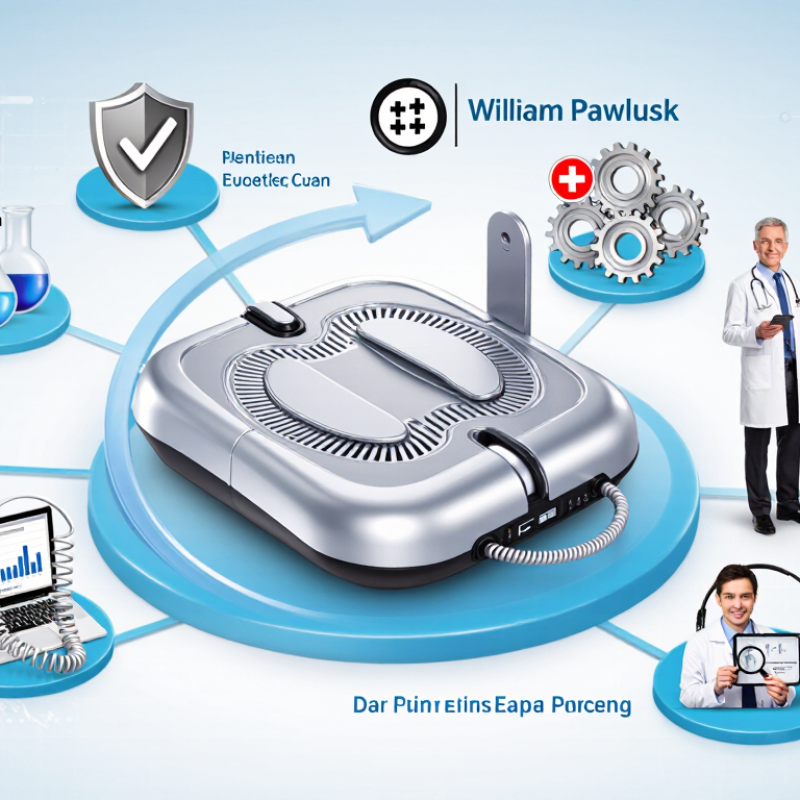
A PEMF foot machine uses pulsed electromagnetic fields around the feet and lower legs. Its coils create changing magnetic pulses, which pass through skin and tissue without heat or pressure. The intended mechanism is cellular stimulation, not massage. Sessions usually involve placing bare feet on a platform for 10 to 30 minutes.
The evidence is more limited than many advertisements suggest. The U.S. Food and Drug Administration recognizes specific PEMF applications, including certain bone-growth stimulators, but approval does not validate every foot-related claim. A 2023 review in Bioelectromagnetics reported mixed results across pain and circulation studies, with small samples and varied treatment settings. The details matter. Frequency, intensity, waveform, and session length can change the outcome.
Market data also requires caution. Grand View Research estimated the global electromagnetic therapy devices market at about USD 0.7 billion in 2023, while other industry reports use different definitions and forecasts. These figures describe commercial growth, not clinical effectiveness. When comparing China-based suppliers, request measured field intensity, waveform data, electrical safety testing, and user instructions. Ask whether testing covers the complete machine, not only individual components. A clear answer is reassuring. A vague promise is not. Independent clinical evidence remains uneven, and that uncertainty should influence purchasing decisions.
China Top PEMF Foot Machine Suppliers: How to Choose? — What Is a PEMF Foot Machine and How Does It Work?
| Evaluation Dimension | Verified Technical Information | Why It Matters for a PEMF Foot Machine | What to Ask or Check with a Supplier |
|---|---|---|---|
| Operating Principle | A PEMF device uses an electronic controller and coils to generate time-varying magnetic fields. The changing field can induce a weak electric field in conductive biological tissue according to Faraday’s law of electromagnetic induction. | This explains how the device delivers non-contact electromagnetic pulses without sending electrical current directly through the feet. | Request a clear system diagram showing the controller, coil layout, pulse-generation method, and field-measurement procedure. |
| Frequency Range | Consumer and professional PEMF systems commonly operate in low-frequency ranges, often from approximately 1 to 100 Hz. The exact range varies by design and intended use. | Frequency affects the pulse pattern and the device’s operating protocol. A wider range does not automatically mean better performance. | Check the selectable frequency steps, frequency tolerance, preset programs, and whether the displayed frequency has been independently measured. |
| Magnetic Flux Density | Field strength may be specified in microtesla (µT) or millitesla (mT). Different foot machines can have substantially different output levels, so the unit and measurement position must be stated. | Output comparisons are meaningful only when the supplier identifies the sensor position, distance from the coil, waveform, and measurement instrument. | Ask for a calibrated magnetic-field test report, including peak or RMS value, measurement location, waveform, and uncertainty. |
| Waveform and Pulse Shape | PEMF products may use sinusoidal, square, triangular, sawtooth, or proprietary pulse waveforms. Pulse duration, rise time, duty cycle, and repetition pattern can also differ. | Two products with the same frequency and nominal field strength may deliver different exposure patterns. | Request oscilloscope or waveform documentation rather than relying only on a marketing term such as “advanced pulse technology.” |
| Coil Configuration | Foot units may use one or more coils positioned beneath, around, or beside the feet. Coil geometry determines field distribution and coverage. | Uniform coverage can be more useful than a high reading at one isolated point. | Ask for a field-mapping report covering the complete foot platform, including the heel, arch, and toe areas. |
| Exposure Area | Most PEMF foot machines are designed for one or both feet and use a platform, pad, wrap, or enclosed applicator. | The usable area affects comfort, positioning consistency, and whether both feet receive a comparable field. | Confirm internal dimensions, maximum foot size, recommended positioning, and whether the field is available across the full contact area. |
| Session Settings | Typical systems provide adjustable session duration, commonly with automatic timers. Preset programs may combine different frequencies, intensities, or pulse patterns. | A timer and repeatable settings support consistent use and simplify testing between units. | Check timer accuracy, program memory, user controls, display readability, and whether settings can be locked for clinic or retail use. |
| Temperature and Noise | PEMF treatment is intended to use electromagnetic fields rather than deliberately heating tissue. Electronic components and cooling fans may still produce mild warmth or audible noise. | Low surface temperature and acceptable noise improve user comfort during longer sessions. | Ask for surface-temperature limits, thermal-protection details, operating noise data, and continuous-operation test results. |
| Electrical Safety | For electrical medical equipment, IEC 60601-1 is a commonly referenced standard for basic safety and essential performance. Applicable requirements depend on the product classification and market. | Electrical safety testing helps address risks such as electric shock, overheating, insulation failure, and abnormal operation. | Request current safety-test reports, input-voltage information, power rating, fuse protection, insulation details, and the applicable product classification. |
| Electromagnetic Compatibility | IEC 60601-1-2 is commonly used for electromagnetic compatibility requirements for medical electrical equipment. Consumer products may follow different applicable standards. | EMC testing evaluates whether the device creates unacceptable interference or is overly affected by nearby equipment. | Ask for EMC test documentation relevant to the destination market and the exact model being supplied. |
| Quality Management | ISO 13485 is an internationally recognized quality-management standard for medical devices. Certification applies to a defined organization and scope, not automatically to every product claim. | A controlled quality system can support traceability, corrective actions, document control, and consistent production. | Verify the certificate issuer, certificate scope, validity dates, manufacturing site, and whether the supplied model is covered. |
| Regulatory Documentation | Market-access requirements differ by country. A CE marking, registration, or other conformity document does not by itself prove clinical effectiveness for every claimed use. | Correct documentation reduces import, labeling, and compliance risks. | Confirm the intended use, product classification, declaration of conformity, technical file availability, labeling language, and post-market obligations. |
| Clinical Evidence | Evidence for PEMF varies by indication, device design, exposure protocol, and study quality. Results from one PEMF device or medical indication should not automatically be transferred to another. | Clinical claims should be matched to the exact model, parameters, and intended use rather than broad statements about wellness or healing. | Request peer-reviewed studies, protocol details, inclusion criteria, measured outcomes, adverse-event reporting, and evidence that matches the proposed claim. |
| Safety Screening | People with implanted electronic devices, such as pacemakers or insulin pumps, should obtain advice from a qualified healthcare professional before using PEMF equipment. Pregnancy and other medical conditions may also require professional guidance. | Magnetic fields and electronic devices can interact, and individual medical risks cannot be assessed from product specifications alone. | Check the contraindications, warnings, user manual, recommended separation distances, and emergency-stop instructions. |
| Materials and Cleaning | Foot-contact surfaces should be durable, non-porous where appropriate, and compatible with the cleaning agents specified by the manufacturer. | Easy cleaning is important for home, clinic, fitness, and shared-use environments. | Ask for material specifications, cleaning instructions, ingress-protection information where applicable, and replacement-part availability. |
| Reliability Testing | Useful reliability information includes repeated power-cycle testing, timer testing, coil-temperature testing, controller endurance testing, and inspection of connectors and cables. | Reliability testing helps reduce failures caused by frequent sessions, transportation, or long operating periods. | Request test plans, sample size, acceptance criteria, failure records, and warranty terms for the controller, coil, adapter, and accessories. |
| Supplier Verification | A capable supplier should be able to provide consistent technical documents, traceable production information, inspection records, and responsive after-sales support. | Transparent documentation is more useful than a low quoted price when comparing custom or recurring orders. | Evaluate factory audit results, production capacity, quality-control checkpoints, sample consistency, lead time, minimum order quantity, and service response time. |
| Total Cost of Ownership | The purchase price is only one cost component. Shipping, import duties, certification, replacement accessories, software, maintenance, warranty handling, and training may add to the final cost. | A lower initial price may become more expensive if spare parts, documentation, or technical support are limited. | Request a complete quotation covering product, accessories, packaging, testing, documentation, delivery terms, warranty, spare parts, and after-sales service. |
Important: PEMF foot machines should be evaluated according to their exact technical parameters, intended use, regulatory status, and supporting evidence. General product information is not a substitute for medical advice, diagnosis, or treatment.