How to Choose the Best Power Chairs for Your Needs?
Choosing the right power chairs can significantly improve your mobility and independence. Many options exist, making the decision challenging. It’s essential to consider your specific needs before making a choice.
Power chairs offer different features and comforts. Some models are designed for indoor use, while others excel outdoors. Think about where you will use the chair most. This affects which features are most important.
You may feel overwhelmed by the variety available. Reading reviews or consulting with professionals can help. Reflect on your lifestyle; this plays a crucial role in your decision. Power chairs should cater to your unique requirements, enhancing your daily life.
Understanding Power Chairs: Types and Features
Power chairs come in various types, each designed for specific needs and lifestyles. A common type is the compact power chair, which suits indoor use. It's perfect for navigating tight spaces. These chairs often come with smaller wheels and a tighter turning radius. However, they may struggle on uneven terrain.
For outdoor enthusiasts, heavy-duty power chairs are more appropriate. These models boast larger wheels and robust suspensions. They can handle rough surfaces like gravel or grass. Still, their bulkiness may limit indoor maneuverability. Users need to weigh the pros and cons carefully.
Features are equally important when selecting a power chair. Adjustable seating enhances comfort for long-term use. Controls should be user-friendly to avoid frustration. Battery life is crucial too, as it determines how far you can travel. The weight capacity is another significant aspect to consider. Failing to choose the right chair could lead to discomfort or safety issues in daily life. Therefore, evaluate personal needs thoroughly before making a decision.
Assessing Your Mobility Needs and Lifestyle Requirements
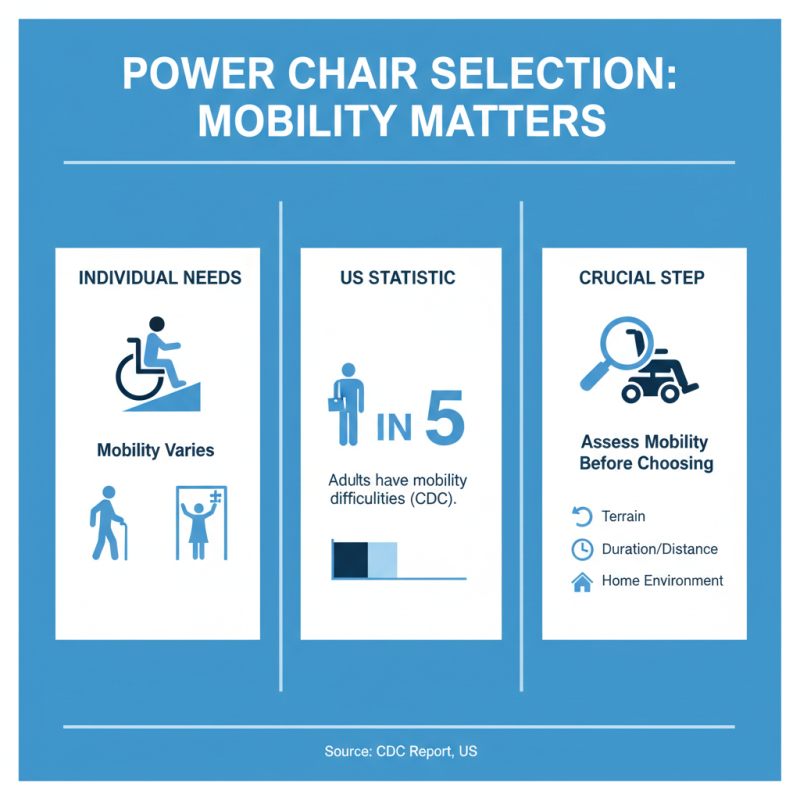
Assessing mobility needs is crucial when choosing a power chair. Mobility varies greatly from person to person. According to a report by the CDC, about 1 in 5 adults in the U.S. have mobility difficulties. This statistic emphasizes the importance of understanding individual requirements.
Consider daily routines and environments. Are you using the chair indoors or outdoors? Will you navigate narrow hallways or rough terrains? For instance, a compact model may excel in tight spaces, but may struggle on uneven ground. More than 70% of users prioritize features that enhance comfort over aesthetics in their chairs, as noted in a recent industry study.
Think about daily activity levels. Some may need a chair that supports frequent outings, while others might require more stability for home use. A survey revealed that 60% of users reported dissatisfaction due to “misfit” power chairs. Reviewing options through the lens of lifestyle is essential. Take note of how often and where you'll use your chair. A reflection on these elements sheds light on better choices.
Key Factors to Consider: Size, Weight, and Portability
When selecting a power chair, three key factors must be prioritized: size, weight, and portability. The right size is crucial for comfort and usability. According to the National Mobility Equipment Dealers Association (NMEDA), a proper width ensures that users can maneuver through doorways and tight spaces. A chair that is too wide may result in frustration and limit access to various environments.
Weight plays a significant role too. Most power chairs weigh between 100 to 300 pounds. A lighter chair can offer easier transport, particularly for those who drive or use public transit. The ability to lift and store the chair without assistance is essential. Data from the National Institute on Disability states that nearly 60% of users prefer a chair that they can lift themselves.
Portability is not just about weight. It involves how easily the chair can be disassembled or folded. Many models are made for easy transport, but some do not fold as expected. Users often underestimate this feature, leading to challenges during travel. A recent survey indicated that 35% of power chair users encountered issues with portability. Taking the time to assess these factors ensures a better fit for daily life, reflecting the real-world constraints many face.
Budgeting for Your Power Chair: Costs and Insurance Options
When budgeting for a power chair, it's essential to consider various costs. The initial purchase price is just one part. You may face ongoing maintenance costs too. Some chairs require special batteries that can be pricey. Regular servicing helps to avoid larger repairs later.
Insurance options often play a crucial role in your budget. Many policies may cover part of the cost. However, coverage options vary widely. It’s wise to review your plan. Some people find themselves paying out-of-pocket. This can be a significant financial burden.
Additional features can enhance your chair but add to the cost. Adjustable seating and customized controls might be beneficial. Yet, they could exceed your budget. Weighing the long-term benefits against short-term expenses is vital. Reflecting on your priorities helps in making the right decision.
Where to Buy: Trusted Retailers and Online Resources
When looking for power chairs, knowing where to buy is crucial. Trusted retailers often provide a range of options. Local medical supply stores can offer personalized assistance. Staff can help you understand features and fit. Online resources can also be invaluable. Websites specializing in mobility equipment offer reviews and comparisons.
Tips for buying include checking return policies. Ensure you have the option to return the chair if it doesn’t meet your needs. Look for online retailers that offer detailed specifications. It’s helpful to read customer reviews to gauge satisfaction. Don’t forget to compare prices across different platforms. Sometimes, you may find better deals online.
Keep in mind that trying a chair before buying is important. Comfort is subjective, and what works for one person may not work for you. Visiting stores provides a chance to test different models. This process can reveal unexpected preferences. Think about your lifestyle and space. A power chair should fit smoothly into your daily routine.
Comparison of Power Chair Features
This bar chart compares essential features of power chairs to help you choose the best one for your needs. The values represent standard measurements for weight capacity, battery life, speed, seat width, and adjustability. Analyze these features based on your requirements for optimal comfort and usability.