How to Choose a Smart Door Lock in 2026?
Choosing a Smart Door Lock in 2026 requires more than comparing fingerprints, keypads, and app features. The market is expanding quickly. Grand View Research estimates that the global smart lock market will grow at a strong double-digit rate through 2030. MarketsandMarkets reports a similar direction, although its figures differ because each firm defines the category differently. That disagreement matters. Market forecasts are useful signals, not guarantees.
A practical choice starts at the door itself. Measure the backset, cylinder position, door thickness, and available clearance. A beautifully designed lock is useless if its motor cannot turn your existing deadbolt. Check whether it supports Apple Home, Google Home, Alexa, Matter, or another platform you already use. Matter can improve compatibility, but it does not remove every setup problem. Wi-Fi models often offer remote access. Bluetooth models may use less power. A hub can add cost and another failure point.
Security deserves closer attention than appearance. Look for encrypted communication, two-factor authentication, activity logs, low-battery warnings, and a reliable mechanical override. NIST guidance emphasizes strong authentication, secure updates, and careful device management. Independent testing also matters more than a polished product page. Ask how quickly the manufacturer patches vulnerabilities and how long it supports the model. No lock is perfect. Batteries can fail. Apps can change. A backup key or external power contact may prevent a cold, frustrating moment outside your home. I may sound cautious. That is deliberate. The right Smart Door Lock balances physical fit, digital security, privacy, convenience, and long-term support.
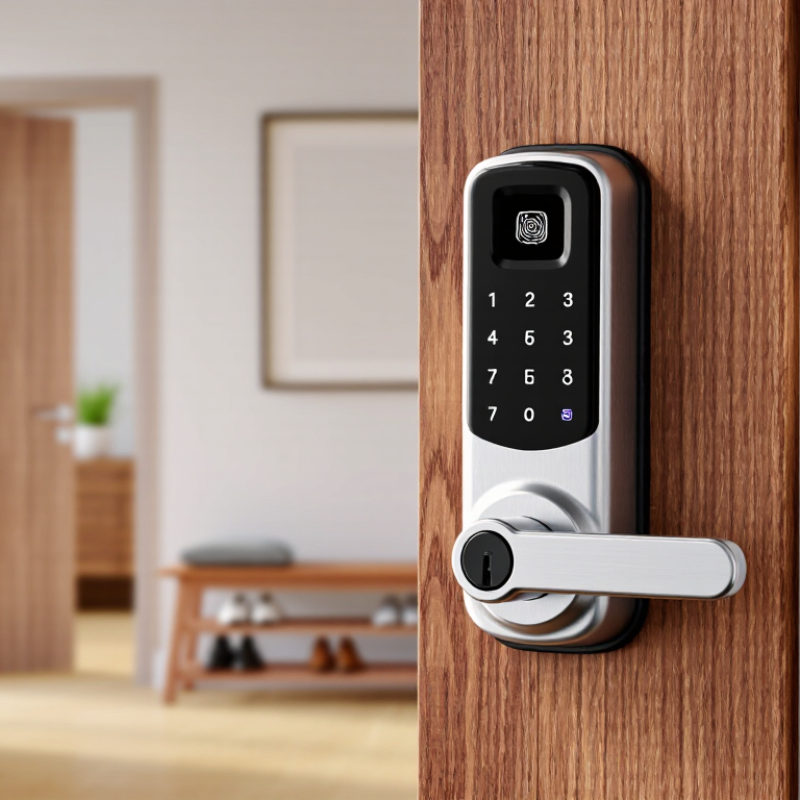
Smart Door Lock Basics and Main Locking Technologies
How to Choose a Smart Door Lock in 2026?
Smart door locks combine a physical locking mechanism with electronic access control. The core lock is usually a deadbolt, latch, or mortise system. A motor turns the bolt after receiving a valid command. Some models use a solenoid instead, which moves a metal pin quickly but may consume more power.
Access methods vary. Keypads suit families and rental properties because codes can be changed easily. Fingerprint readers offer fast entry, but wet or dirty fingers can reduce accuracy. Mobile access often uses Bluetooth, Wi-Fi, or a bridge device. Bluetooth saves battery power. Wi-Fi supports remote control but needs stronger network security. NFC can provide convenient tap access on compatible devices.
Tips: Check your door alignment before buying. A quiet motor cannot fix a warped frame. Confirm the lock fits your backset and door thickness. Test the manual key override, even if you expect never to use it. Examine battery warnings, emergency power options, and weather resistance. Encryption matters, but poor account passwords still create risk. Choose separate access codes for household members, cleaners, and guests. Delete unused codes promptly. In practical checks, installation often causes more trouble than the software. I once underestimated a narrow door frame; the lock worked, but the thumb turn felt awkward. That detail deserved more attention.
Assessing Door Compatibility and Installation Requirements
How to Choose a Smart Door Lock in 2026?
A smart lock should fit your door before it fits your lifestyle. Measure the door thickness, backset, and borehole diameter. Check whether the door uses a single deadbolt, mortise lock, rim lock, or multipoint mechanism. These parts are not interchangeable. A small mismatch can prevent the latch from extending fully.
Open and close the door slowly. Look for scraping, loose hinges, or a frame that shifts under pressure. Smart locks need accurate alignment, because their motors have limited force. Measure the clearance behind the door and above the interior thumb turn. Some models require more space than expected. I once assumed a standard door would fit, but the narrow frame made installation awkward.
Installation may involve removing the existing cylinder, drilling new holes, or adjusting the strike plate. Avoid drilling until the measurements match the lock’s requirements. Renters should request written permission before changing hardware. In older homes, wiring and door materials can differ from modern specifications. A qualified installer can identify hidden problems and verify that emergency exit functions remain usable. Follow the manufacturer’s technical guide, then check local building and fire-safety requirements. Keep a mechanical backup option when practical. Batteries also need accessible replacement space. A perfect app cannot fix a poorly aligned door.
Comparing Security Features, Access Methods, and Privacy Controls
Choosing a smart door lock in 2026 requires more than checking its app rating. Security begins with strong encryption, signed firmware updates, and protection against repeated password attempts. Look for two-factor authentication, independent security testing, device tamper alerts, and a reliable mechanical override. A low-battery warning should appear early, not when the keypad is already dark. During a practical check, test the lock at night, with wet fingers, and after the phone loses internet access. Small failures matter.
Access methods should match the people using the door. A keypad suits children and guests, while a phone connection offers detailed permissions. Fingerprint readers can be convenient, but performance may drop with cold or damaged skin. Temporary codes should have start and expiry times. Keep an audit log showing which method opened the door. Review it monthly. Some systems offer remote unlocking, yet that feature deserves caution. I would disable it unless alerts, identity checks, and clear approval steps are available.
Privacy controls deserve the same attention as security hardware. Check whether access history is stored locally or uploaded, how long records remain, and whether deletion is possible. Prefer clear settings for voice data, location, and household member accounts. A privacy policy should explain sharing in ordinary language, not hide behind vague promises. No system is perfect. Convenience can quietly expand permissions over time. Recheck them after software updates, and remove old guest accounts immediately.
Choosing the Right Smart Door Lock for Your Budget and Lifestyle
Choosing a smart door lock should begin with your budget and daily routine. The global market is expanding quickly. Grand View Research estimated the market at $2.54 billion in 2023, with a 20.1% annual growth forecast through 2030. Definitions vary between reports, so market figures deserve caution. Still, demand is clearly rising.
Start with the door. Measure the backset, check the deadbolt shape, and confirm whether the lock fits a metal or wooden frame. A renter may prefer a removable interior retrofit. A homeowner might choose a full replacement with a keypad and activity history. Under a limited budget, prioritize reliable locking, long battery life, and a physical key option. Fancy fingerprint features can wait. Convenience is not security.
For frequent travelers, remote access and temporary codes can simplify guest entry. Families may value separate codes for children, cleaners, or caregivers. Before buying, check whether Wi-Fi works near the entrance. Some locks need a separate bridge, adding cost and another failure point. Fortune Business Insights valued the smart lock market at $2.49 billion in 2023 and forecasts $8.21 billion by 2032. That growth also means more untested products. Look for published encryption details, firmware support, low-battery warnings, and independent security testing. Test the manual override. It should work smoothly in darkness. A smart lock that depends entirely on an app may become frustrating during a dead battery or network outage. Convenience has limits.
How to Choose a Smart Door Lock in 2026?
Choosing the right smart door lock depends on your budget, preferred access methods, connectivity needs, and installation requirements.
Typical U.S. retail planning ranges for 2026 are shown before professional installation. Entry models usually provide keypad access, mainstream models commonly add app control and remote access, while premium models often include biometric entry, stronger security hardware, and broader smart-home compatibility.
