How to Choose a Ceramic Conical Burr Coffee Grinder?

Coffee has become a daily ritual for millions of households, yet grinder choice still receives less attention than beans or brewing equipment. The International Coffee Organization reported global coffee consumption at about 177.9 million 60-kilogram bags in 2023/24. At the same time, the National Coffee Association’s Spring 2024 National Coffee Data Trends report found that 67% of American adults had consumed coffee during the previous day. More cups create more reasons to control grind quality.

A Ceramic Conical Burr Coffee Grinder can offer consistent particle production, quiet operation, and strong resistance to corrosion. However, ceramic burrs are not automatically better. Burr geometry, alignment, adjustment steps, motor speed, and retention also affect the final cup. The Specialty Coffee Association’s brewing standards emphasize repeatable variables, including grind size, water, dose, and extraction time. A grinder is part of that system.

Small details matter. Imagine a morning kitchen: beans fall unevenly, the dial moves between settings, and fine particles cling inside the chute. Those moments can change bitterness, sweetness, and clarity. Personal testing remains valuable, but it can also be imperfect. Taste memory is unreliable. Grinder marketing can sound more precise than real-world performance.

This guide examines burr material, conical design, adjustment control, durability, cleaning, noise, and brewing compatibility. It also considers manufacturer claims against practical evidence, user reviews, and recognized coffee standards. The right choice depends on more than ceramic construction. It depends on how consistently the grinder supports the cup being brewed.
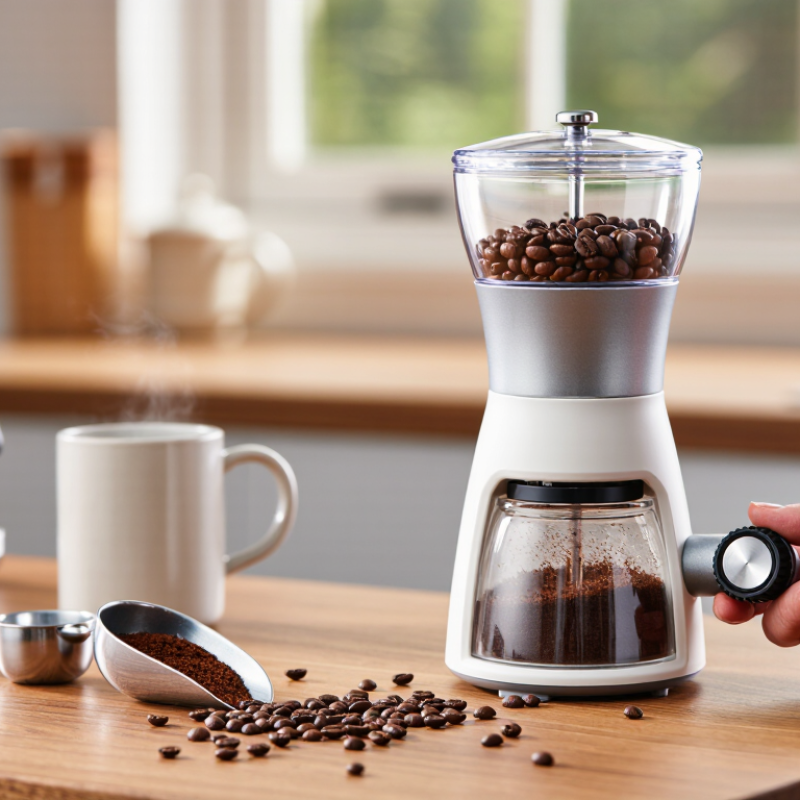
How to Choose a Ceramic Conical Burr Coffee Grinder?

Define Brewing Goals with SCA’s 55 g/L Ratio and 1.15–1.35% TDS Target

How to Choose a Ceramic Conical Burr Coffee Grinder?

Start with a measurable brewing goal. The Specialty Coffee Association recommends about 55 grams of coffee per liter of water. Its Golden Cup guidance targets 1.15–1.35% total dissolved solids, or TDS. For a 327-gram mug, that equals roughly 18 grams of coffee. These figures come from the SCA Coffee Standards and Brewing Handbook.

A ceramic conical burr grinder should support that target consistently. Look for stable burr alignment, clear grind adjustments, and low retention between settings. A uniform medium grind usually suits filter brewing, but the correct setting depends on water, coffee density, and brewing time. Small changes matter. One click can alter flow by several seconds.

Use a scale and, when possible, a calibrated refractometer. Measure your beverage after brewing, then compare the reading with the SCA range. A low TDS result may suggest a finer grind, longer contact time, or hotter water. A high result may need a coarser setting. Do not change everything at once.

My first dial-in was not perfect. The cup tasted thin, although the recipe looked correct. The grinder produced extra fines, and the drawdown slowed near the end. That experience changed my buying criteria. Smooth adjustment is useful, but repeatability matters more. Ceramic burrs can resist heat during slow grinding, yet burr wear, alignment, and cleaning still deserve attention. Reports from the SCA and World Coffee Research also show why sensory evaluation remains essential: numbers guide decisions, but taste reveals balance.

How to Choose a Ceramic Conical Burr Coffee Grinder?

Define your brewing goals with the SCA reference ratio of 55 g of coffee per liter of water and a target beverage strength of 1.15–1.35% TDS.

The chart shows the coffee dose needed for common brew volumes when maintaining a 55 g/L ratio. A grinder should produce a consistent particle size and repeatable dose across these brew sizes. After brewing, use a refractometer to check whether the beverage falls within the 1.15–1.35% TDS target range; grind size, water temperature, contact time, and pouring technique will affect the final result.

Compare Ceramic Burr Hardness, Heat Resistance, and Expected Service Life

How to Choose a Ceramic Conical Burr Coffee Grinder?

Ceramic burrs are extremely hard. The ASM Handbook places dense alumina ceramics near 9 on the Mohs scale, above most stainless steels. This hardness resists abrasion from daily grinding. It also helps ceramic edges remain sharp with dry beans. However, hardness is not toughness. A small stone can chip a ceramic edge, while steel usually bends or dents first. My practical observation is simple: ceramic burrs feel consistent, but they punish careless cleaning.

Heat resistance needs a closer look. Ceramic keeps its hardness at temperatures that would soften many metals, according to ASM Handbook material data. Yet ceramic also transfers heat less efficiently than steel. The burr may stay stable while heat remains around the axle or motor. Coffee temperature during normal home grinding is usually modest, so alignment matters more than dramatic heat claims. The Specialty Coffee Association emphasizes particle-size consistency, but it does not publish one universal burr lifespan. Service life therefore depends on dose, bean hardness, dust, and accidental contamination. Any exact “five-year” promise feels too confident.

Tips: Choose ceramic for quiet, manual use and corrosion resistance. Choose steel for heavy workloads and impact tolerance. Clean without tapping the burrs. Replace them when grind size drifts, particles become uneven, or adjustment requires excessive movement. Keep records for one month; memory is unreliable.

Select Burr Diameter and Geometry for Espresso, Pour-Over, or French Press

Choosing a ceramic conical burr grinder starts with diameter and burr geometry, not appearance. A larger diameter usually grinds faster and handles heat better during repeated use. However, size alone does not guarantee better flavor. For espresso, choose geometry that produces many fine particles with a controlled distribution. Steeper cutting surfaces can improve feeding and reduce stalling. The adjustment system must also offer small, repeatable steps. Espresso exposes weak design quickly. One click may change the shot noticeably.

For pour-over coffee, a medium-sized burr with balanced cutting teeth often works well. It should create clear particles without producing excessive dust. A slightly unimodal grind can highlight floral and citrus notes. Yet, too much uniformity may reduce body. This is where personal taste matters. For French press, choose a geometry that produces consistent coarse particles and fewer fines. A wider burr can make coarse grinding easier, but it may still leave uneven pieces if the teeth are poorly aligned. I once assumed a larger burr would solve everything. It did not. Alignment mattered more than expected.

Tips: Match burr geometry to your brewing method, then test one variable at a time. Weigh the coffee, record the setting, and taste after cooling. For espresso, check shot time and flow. For pour-over, watch drawdown speed. For French press, inspect the sediment at the bottom. Ceramic burrs resist corrosion and heat, but they can chip if hard debris enters the grinder. Clean carefully, and replace damaged parts rather than accepting inconsistent grounds.

Evaluate Grind Adjustment Precision Against Desired Particle-Size Consistency

How to Choose a Ceramic Conical Burr Coffee Grinder?

A ceramic conical burr grinder should match your desired particle-size consistency. A precise adjustment system matters more than having many settings. During testing, turn the dial slowly and watch how each click changes the grounds. If one click moves from powdery fines to coarse fragments, the adjustment is too aggressive. Small, repeatable steps usually produce better control for pour-over and espresso.

Inspect the burr alignment and shaft stability. Hold the grinder gently and check for noticeable wobble. Uneven movement can create mixed particles, even when the dial appears precise. Consistent grounds should look similar under bright light, with limited dust and very large pieces. Ceramic burrs resist heat well, but they still need careful cleaning. Coffee oils and old fragments can affect adjustment accuracy. I once judged a grinder too quickly because I ignored residue inside the burr chamber. That was my mistake.

Tips: Compare three settings, not one. Grind the same dose each time and examine the particles on white paper. Record the number of clicks, brewing time, and flavor. A balanced cup with steady flow suggests useful consistency. However, visual inspection is imperfect. A simple sieve test gives stronger evidence. Choose the grinder that produces repeatable results in your hands, not merely the one with the longest adjustment scale.

How to Choose a Ceramic Conical Burr Coffee Grinder? — Evaluate Grind Adjustment Precision Against Desired Particle-Size Consistency
Evaluation Dimension Common Reference Range or Requirement Why It Matters for Particle-Size Consistency Recommended Buying Standard Priority
Adjustment Type Stepped, stepless, or hybrid adjustment Stepped systems provide repeatable settings, while stepless systems allow finer tuning but may be harder to reproduce. Choose stepped adjustment for repeatability; choose stepless adjustment when very fine dial-in control is required. High
Adjustment Increment Approximately 0.02–0.10 mm of burr movement per step, depending on the mechanism A smaller burr movement generally makes it easier to make controlled changes without moving quickly past the desired particle size. For espresso, prefer the smallest practical increment. For pour-over and French press, moderate increments are usually sufficient. High
Number of Usable Settings At least 20 settings for basic versatility; 30 or more offers finer control More usable positions can provide smoother transitions between brewing methods, but the number of clicks alone does not prove better consistency. Confirm that the settings are evenly spaced and usable across the intended brew range. High
Espresso Particle-Size Target Common starting point: approximately 200–400 micrometres median particle size (D50) Espresso is sensitive to small grind changes because water passes through a compact bed under pressure. Use a grinder with fine, repeatable adjustment and minimal play in the adjustment mechanism. High
Pour-Over Particle-Size Target Common starting point: approximately 500–900 micrometres median particle size (D50) A consistent medium grind helps balance flow rate, extraction time, and resistance through the filter bed. Prioritize repeatable mid-range settings and a stable burr shaft over an extremely high number of clicks. High
French Press Particle-Size Target Common starting point: approximately 900–1,400 micrometres median particle size (D50) Coarser particles reduce the amount of sediment passing through the mesh and help limit excessive extraction during steeping. Look for a reliable coarse setting and an adjustment system that does not drift during grinding. Medium
Particle-Size Distribution A practical goal is a narrow distribution around the target size, with limited excess fines and boulders Fines can extract quickly and contribute bitterness, while oversized particles may remain under-extracted. Do not judge consistency from burr material alone; assess alignment, manufacturing tolerances, and real grind samples. High
Burr Alignment The two conical burr surfaces should remain parallel and centered during rotation Misalignment can create uneven cutting gaps, producing a wider particle-size distribution even when adjustment steps are precise. Prefer a grinder with a rigid axle, stable bearings, and minimal lateral movement at the burr shaft. High
Ceramic Burr Diameter Common manual-grinder range: approximately 30–48 mm Larger burrs can process beans more efficiently, but diameter alone does not determine grind uniformity. Match burr size to workload; evaluate alignment and adjustment control together with diameter. Medium
Burr Surface Condition Sharp, evenly formed cutting surfaces with no visible chips, cracks, or irregular wear Damaged or uneven ceramic surfaces can increase fines and make the output less predictable. Inspect the burrs when possible and avoid units with visible damage or rough, inconsistent rotation. High
Adjustment Drift Zero unintended movement during a normal grinding session If the setting moves while grinding, the particle size can change from one dose to the next even when the user follows the same recipe. Choose a locking ring, detent system, or tension mechanism that holds the selected setting securely. High
Repeatability Test Three consecutive doses at the same setting should produce comparable grind appearance, mass distribution, and brew flow Repeatability is more useful than the advertised number of adjustment positions because it reflects real-world consistency. Test the same bean, dose, and setting three times before comparing performance. High
Retention Low retention is generally preferred; approximately 0.1–0.5 g is a practical low-retention reference for compact manual grinders Retained grounds can alter the next dose and may introduce stale particles into a fresh brew. Prefer a simple, accessible grind path that can be emptied and cleaned easily. Medium
Grinding Load and Speed Manual grinding commonly takes roughly 30–90 seconds for a 15–20 g dose, depending on bean density and grind size Excessive resistance can encourage uneven hand motion, burr wobble, or inconsistent grinding pressure. Choose a smooth, stable mechanism that can maintain consistent rotation without excessive force. Medium
Calibration and Zero Point A clearly defined zero point with repeatable reference marks Calibration makes it easier to record settings, reproduce recipes, and compare particle-size changes. Prefer numbered or clearly indexed settings with a consistent reference position. High
Cleaning and Wear Control Removable burr components and no requirement for frequent lubrication of food-contact surfaces Coffee dust and oils can affect adjustment movement and change the effective burr gap over time. Choose a design that allows regular brushing and inspection without damaging the ceramic burrs. Medium
Selection rule: Choose the grinder whose adjustment increment, burr alignment, and setting stability match the particle-size consistency required by your brewing method. A large number of clicks is useful only when each setting is repeatable and the burr gap remains stable during grinding.

Verify Retention, Dosing Accuracy, Cleaning Access, and Safety Compliance

How to Choose a Ceramic Conical Burr Coffee Grinder?

Retention is easy to overlook, yet stale grounds can hide inside the burr chamber. I test it by grinding five grams, then weighing the grounds after brushing out the chamber. A noticeable difference suggests trapped coffee. Tap the grinder gently and inspect the chute. Some models retain more than expected.

Dosing accuracy matters when preparing small espresso portions. Use a digital scale and repeat the same setting several times. Record the dose from each test. A variation of 0.2 grams may affect extraction. My own mistake was trusting the timer without checking the actual output. Grind size, bean density, and static can all change the result. No grinder doses perfectly.

Cleaning access should not require awkward tools or excessive force. Look for a removable hopper, visible burr surfaces, and a narrow chute that accepts a small brush. Ceramic burrs resist corrosion, but they still need careful handling. Never scrape them with metal. Check for hairline cracks after cleaning. This step is easy to skip.

Safety compliance deserves equal attention. Confirm that the grinder has stable feet, protected moving parts, heat protection, and a properly insulated power cord. Check certification requirements for your region, not just a printed symbol. The manual should explain safe disassembly and cleaning. A grinder that performs well but feels unstable is not a reliable choice. Better testing takes time.

ACCESS ABILITY Home Medical Store has a Beautiful showroom in Cudahy To Serve You!

Corporate Office And Store
Cudahy, Wisconsin

1995 E Norse Ave
Cudahy, WI 53110
Phone: 414-486-6249
Fax: 414-486-5728