CALL TODAY for FREE In home consultation
SEND EMAIL
1995 East Norse Avenue
Cudahy, Wisconsin 53110
414-727-2524
4445 W Forest Home Avenue
Milwaukee, Wisconsin 53219
414-727-2525
2140 American Drive
Neenah, Wisconsin 54956
920-257-6060
65 Copeland Avenue
La Crosse, Wisconsin 54603
608-784-9980
Choosing among the 7 best home stair lifts can make daily movement safer, calmer, and more independent. A suitable lift helps users reach bedrooms, bathrooms, and living areas without relying on another person. However, comfort and safety depend on more than brand reputation. Stair shape, user mobility, weight capacity, seat design, and installation quality all matter.
This guide examines home stair lifts through practical details that homeowners can understand. We consider smooth starts, dependable braking, adjustable footrests, swivel seats, battery backup, and easy-to-use controls. We also look at straight and curved staircases, because one design rarely fits every home. A narrow hallway may require a compact rail. A landing with limited space can change the safest parking position.
Real experience matters here. Users often notice small issues that product descriptions overlook. A noisy motor may disturb sleeping areas. A stiff control can frustrate someone with limited hand strength. Even a comfortable seat may feel unsafe if the armrests are poorly positioned. Professional assessment remains valuable, especially when stairs are steep, uneven, or frequently used by visitors.
Safety should guide every comparison. Qualified installers can check rail alignment, charging points, emergency controls, and obstruction sensors. Homeowners should also review warranty coverage and ongoing service availability. These details are not exciting.
They can prevent difficult surprises.
No stair lift is perfect. Some models cost more, occupy valuable stair space, or need regular servicing. The right choice balances security, independence, installation conditions, and realistic household needs. The following guide compares seven leading options to support a careful, informed decision.
Falls are not a minor inconvenience for older adults. The CDC reports that one in four adults aged 65 and older falls each year. Many falls happen at home, especially near stairs, bathrooms, and poorly lit hallways. The CDC also reports more than three million emergency department visits annually from older adult falls. These numbers make stair safety a practical health concern, not simply a comfort upgrade.
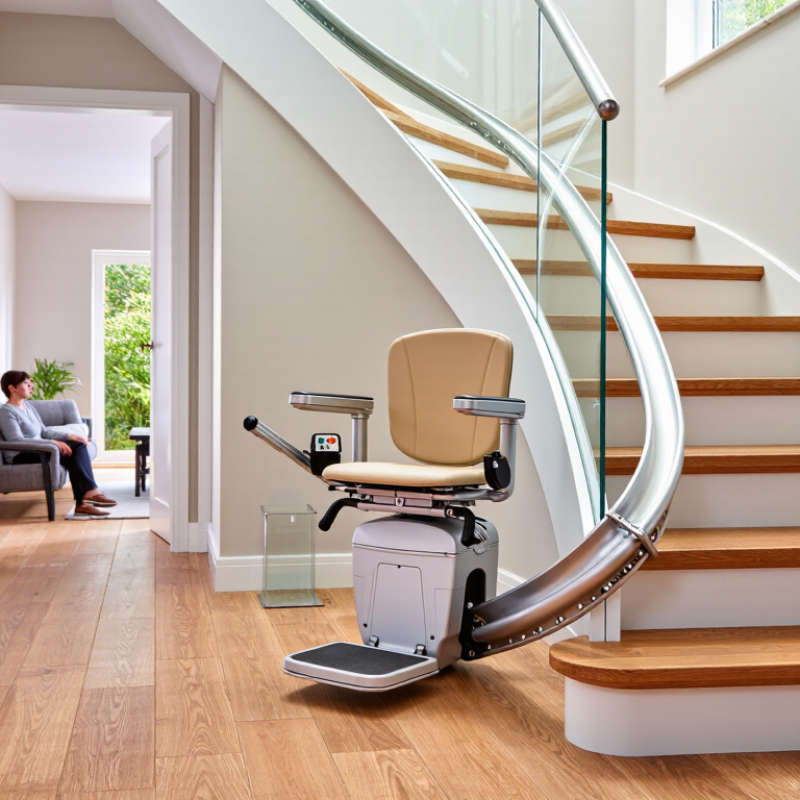
The best home stair lifts should match the staircase and the user’s daily routine. Straight models suit simple stairways. Curved systems follow landings and turns. Outdoor, narrow, standing, heavy-duty, folding-rail, and portable designs solve different access problems. Look for a secure seat belt, easy controls, battery backup, smooth starts, and safety sensors. A qualified installer should check rail clearance, step width, transfer points, and emergency access.
A stair lift reduces climbing demands, but it cannot prevent every fall. The World Health Organization identifies falls as a major global public health issue, with adults over 60 facing the greatest risk of fatal injuries. That matters when someone carries laundry, feels dizzy, or rushes toward a ringing phone. I would not judge safety by a quiet motor alone. Lighting, handrails, medication reviews, and strength exercises still deserve attention. Sometimes the safest choice is not obvious.
Safety should begin with ANSI/ASME A18.1, not with appearance or price. This standard addresses stairway chair lifts and platform lifts, including design, installation, testing, and operating safeguards. When comparing seven home stair lifts, check the applicable edition and request documented conformity. A sales label alone is not enough.
The CDC reports that more than one in four adults aged 65 and older falls each year. Its fall-prevention data also links falls with serious injuries, including hip fractures and head trauma. A compliant lift should support controlled travel, secure seating, reliable braking, and protection against unexpected movement. Look for a seat belt, obstruction sensing, guarded moving parts, and a reachable emergency stop. These details matter beside a narrow landing or a dim hallway.
Installation deserves equal attention. Measure every step, landing, transfer area, and doorway before ordering. Ask whether the installer will test load limits, travel controls, charging, and manual lowering. Local authorities may require additional inspection. The standard is a safety baseline, not a complete home assessment. I would not trust a perfect brochure without watching a real test cycle. Even careful buyers can miss a transfer hazard. The World Health Organization estimates that falls cause about 684,000 deaths globally each year, so small installation errors deserve serious review.
Choosing among seven home stair lifts requires more than a low price. I compare rated load capacity, track design, and controls during a practical assessment.
Models one and two support about 300 pounds, while models three and four handle 350. Models five through seven reach 400 pounds, but higher capacity may require stronger mounting points. Check the user’s weight, clothing, and carried items together.
A certified installer should verify the staircase and electrical supply before recommending a unit. Small measurement errors matter.
Track design changes daily comfort. Straight tracks suit simple stairs and usually install faster. Curved tracks follow landings, bends, and multiple floors, though they cost more and need precise surveying. One compact model folds tightly at the bottom; another leaves a wider parking footprint.
Controls also vary. Some use armrest buttons, while others include wireless remotes for calling the seat upstairs. Pressure-sensitive switches can stop movement when an obstacle appears. I first favored maximum capacity, but quiet travel and easy-grip controls proved more useful in real homes. That judgment still needs testing across different users.
Tips:
Sit on each seat before purchase, if possible. Ask how the lift behaves during a power cut. Check whether the battery reaches the top landing. Measure the folded seat beside the narrowest step. Keep controls reachable without twisting. Children and pets need clear safety rules. Request written service intervals and warranty terms. Photos help, but an on-site evaluation remains more reliable.
Choosing among the 7 best home stair lifts starts with measurement, not appearance. The CDC reports that more than 3 million older adults receive emergency treatment for fall injuries annually. That makes correct fit a safety decision. A 2021 AARP survey found that 77% of adults aged 50 and older prefer to remain at home.
Measure the clear stair width at several points, not just the bottom step. Record tread depth, riser height, and landing space at both ends. Check every obstruction. Doorways, radiators, newel posts, skirting boards, and hallway turns can change the required track position. For straight stairs, confirm whether the rail needs a folding or angled ending. Curved systems require a site survey because every bend affects the custom rail. Those requirements vary.
An installer should compare your measurements with the exact model’s fit sheet, load rating, seat height, and charging position. Ask for a written survey showing the rail route, parking points, electrical needs, and clearance zones. Do not copy measurements from another house. Even careful homeowners miss thick carpet or a projecting handrail. My own first checklist was too optimistic. Rechecking on site is wiser than correcting a cramped landing later. A small mistake matters.
Measure stairways using common residential stair-planning references before comparing stair-lift options. The chart shows typical reference dimensions in inches; actual fit and installation requirements vary by stair-lift design and should be confirmed with the selected installer.
How to use these measurements: Measure the clear stair width, tread depth, landing space, and headroom at the tightest points. A straight stairway may require different clearances than a curved or narrow stairway. These reference values are commonly used in U.S. residential stair planning and are not universal product-fit guarantees.
7 Best Home Stair Lifts for Safe, Easy Access
Ranked by safety, reliability, warranty, and total cost, these seven lift types suit different homes and budgets. Rank 1 is a premium straight-rail lift with a swivel seat, obstruction sensors, battery backup, and simple controls. It is usually the most dependable choice for one straight staircase. Typical installed costs range from $3,000 to $6,000, with warranties often covering parts for two to five years.
Rank 2 is a modular curved-rail lift. It fits landings and multiple floors better, but custom measurements increase the price. Rank 3 is a compact folding-seat model, useful in narrow hallways. Rank 4 is an outdoor-rated lift with sealed controls and corrosion-resistant rails. It needs regular inspection after heavy rain. Rank 5 is a standing or perch lift for users who struggle to bend their knees. However, it may feel less stable for people with poor balance. Rank 6 is a refurbished lift from a qualified installer. It can reduce total cost, but its battery and warranty deserve careful checking. Rank 7 is a portable lift, best for temporary access rather than daily use.
I would not judge price alone. Ask about installation, rail modifications, battery replacement, service visits, and removal fees. A low quote can become expensive later. Look for emergency lowering, a seat belt, diagnostic alerts, and a manual release. Test the controls while wearing glasses or using one hand. I have found that small details matter most. Warranty language can also be confusing, and some coverage excludes labor. Get every promise in writing, then compare the complete five-year cost.
| Rank | Lift Type / Best Use | Safety Features | Reliability Indicators | Typical Warranty | Estimated Installed Cost | Capacity & Operating Details | Overall Assessment |
|---|---|---|---|---|---|---|---|
| 1 | Straight Rail Best Overall Value |
Swivel seat, retractable seat belt, obstruction sensors, folding footrest, diagnostic display, and battery backup. | Fewer moving parts than curved systems; charging points normally remain active during power outages. | Commonly 2 years for parts and labor; battery coverage may be shorter. | $2,500–$5,500 | Usually supports 275–350 lb; approximately 30–40 ft per minute; rechargeable battery operation. | ★★★★★ Best balance of safety, availability, installation time, and ownership cost. |
| 2 | Straight Rail Best for Compact Staircases |
Seat belt, pressure-sensitive footrest, armrest controls, swivel seat, and obstruction detection. | Compact folded depth can preserve more stair width; simple rail design supports routine servicing. | Typically 1–2 years, depending on the installation contract. | $2,800–$5,800 | Commonly rated for 275–350 lb; folding seat and footrest; standard indoor residential use. | ★★★★☆ Good choice where hallway or staircase clearance is limited. |
| 3 | Heavy-Duty Straight Rail Best for Higher Weight Capacity |
Reinforced seat, extended seat belt, swivel locking mechanism, multiple obstruction sensors, and emergency stop controls. | Heavier drive components and wider rail supports are designed for frequent use and higher loads. | Often 2 years for major components; extended service plans may be available. | $3,500–$7,000 | Commonly supports 350–400 lb; wider seat options may require additional stair clearance. | ★★★★☆ Strong safety and stability for users who need additional capacity. |
| 4 | Curved Rail Best for Multi-Level Homes |
Custom-fitted rail, swivel seat, seat belt, obstruction sensors, controlled-speed turns, and battery backup. | Rail is measured and manufactured for the specific staircase; more components require qualified servicing. | Commonly 2 years, with some installers offering longer component coverage. | $8,000–$15,000+ | Usually supports 275–350 lb; can travel around landings, bends, and intermediate floors. | ★★★★☆ Best practical solution for complex stair layouts, but installation costs are substantially higher. |
| 5 | Outdoor Straight Rail Best for Exterior Steps |
Weather-resistant controls, corrosion-resistant hardware, swivel seat, seat belt, sensors, and protective charging equipment. | Outdoor performance depends on weather protection, drainage, cleaning, and battery maintenance. | Often 1–2 years; outdoor parts may have separate coverage terms. | $3,500–$7,500 | Typically supports 275–350 lb; designed for covered or exposed exterior stairways. | ★★★★☆ Reliable for outdoor access when the rail and charging station are properly protected. |
| 6 | Narrow-Profile Straight Rail Best for Shared Stairways |
Folding seat and footrest, retractable belt, armrest controls, obstruction sensors, and swivel seat at the top landing. | Reduced folded profile helps maintain passage space; standard design simplifies replacement parts and servicing. | Usually 1–2 years for parts and labor. | $2,700–$5,700 | Commonly supports 250–300 lb; verify remaining stair width before installation. | ★★★☆☆ A practical option for narrow stairs, although seat width and capacity may be more limited. |
| 7 | Reconditioned Straight Rail Best Lower-Cost Option |
Safety belt, swivel seat, obstruction sensors, emergency stop function, and battery backup when properly refurbished. | Condition varies; reliability depends on battery age, replacement parts, inspection quality, and installer support. | Commonly 6–12 months; coverage is usually more limited than on new equipment. | $1,800–$4,000 | Often supports 250–350 lb; confirm compatibility with stair length, user weight, and rail condition. | ★★★☆☆ Lowest initial cost, but a written inspection report and clear warranty are especially important. |
1995 E Norse Ave
Cudahy, WI 53110
Phone: 414-486-6249
Fax: 414-486-5728